 EN
EN


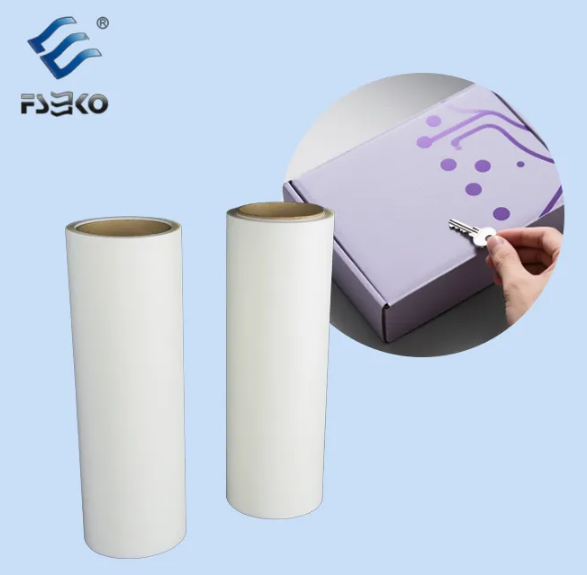
Why Surface Damage Shows Up Faster Than Expected
Printed materials that look sharp off the press can deteriorate surprisingly quickly once they start moving through the supply chain. Stacking, sliding against adjacent sheets, handling by end users, and exposure to humidity all leave marks on unprotected surfaces. Anti scratch BOPP film addresses this directly by adding a hardened outer layer that resists abrasion without altering the visual character of the print underneath. The mechanism is more nuanced than simply "thicker film," and understanding it helps specify the right product for the right application.
The Coating Chemistry Behind Scratch Resistance
The scratch resistance in anti-scratch BOPP films comes primarily from the top coating layer, typically a UV-cured or solvent-borne hard coat applied to the outer surface of the biaxially oriented polypropylene base film. The hardness of this layer is usually measured using the pencil hardness test defined in ASTM D3363, with quality-grade anti-scratch coatings targeting 2H or higher. At that hardness level, ordinary contact abrasion from paper edges, fingernails, and packaging machinery guides does not produce visible surface marks.
The adhesive system on the reverse side is where anti-scratch BOPP film connects to the print substrate. This side follows the same thermal bonding principles as standard precoated BOPP, which means existing lamination equipment runs these films without any conversion modification.
Real-World Performance Comparison
| Film Type | Pencil Hardness | Coefficient of Friction | Humidity Resistance | Relative Cost vs. Standard BOPP |
|---|---|---|---|---|
| Standard Gloss BOPP | HB-F | Moderate | Good | Baseline |
| Matte BOPP | HB | Low | Good | +5-10% |
| Anti-Scratch BOPP | 2H-3H | Low | Excellent | +20-35% |
| Soft Touch BOPP | F | Very Low | Good | +30-50% |
| PET Anti-Scratch | 3H-4H | Low | Excellent | +60-90% |
The coefficient of friction figure matters more than most buyers initially expect. Lower CoF means stacked sheets slide against each other rather than binding, which reduces marking in sheet-fed finishing lines and makes automated counting and bundling more reliable.
Where Scratching Becomes a Commercial Problem
The cases where anti-scratch BOPP film earns its cost premium are usually obvious after the first complaint arrives. Book covers, folding carton lids, retail shelf packaging, and high-touch card products accumulate surface damage quickly under normal distribution conditions. A print finisher running a cosmetics packaging job in eastern China encountered this problem directly: the initial spec used standard gloss BOPP lamination, and within two weeks of arrival at the retailer, the display-facing panels showed visible scuff marks from restocking handling. Switching to an anti-scratch formulation on the rerun eliminated the issue, and the client moved subsequent runs to the new specification permanently.
The upgrade is not always necessary. Packaging destined for single-use or short-shelf-life applications rarely justifies the cost delta. Anti-scratch protection delivers its value when the product will be handled repeatedly or displayed over extended periods.
Application Technique Adjustments
Running anti-scratch BOPP film on a thermal laminator requires paying attention to temperature settings and nip pressure more carefully than with standard precoated films. The hard coat layer on the outer surface is less forgiving of temperature spikes, which can cause surface micro-cracking. Most manufacturers specify a process window of plus or minus 5°C around the recommended nip temperature, and sticking to that window matters more when the ambient shop temperature varies through the shift.
Laminator roll cleanliness is another underappreciated factor. Contamination on the nip rolls transfers to the film surface under heat and pressure, and anti-scratch coatings make transferred marks slightly more visible than they would be on matte or standard gloss films. A scheduled cleaning protocol between jobs prevents this from becoming a quality issue.
Evaluating Suppliers on Scratch Resistance Claims
Scratch resistance specifications vary significantly between manufacturers, and not all claims are backed by the same test methodology. When evaluating film suppliers, asking for pencil hardness test reports under ASTM D3363 or ISO 15184 gives a verifiable baseline. The test should be conducted at multiple points across the film width to confirm coating uniformity, not just at the center of the roll.
Coating uniformity across a full production roll is where manufacturing process control separates suppliers. Thin spots in the hard coat layer appear in high-wear zones first and create inconsistent field performance that's difficult to diagnose without tracing back to the film specification.
EKO's anti-scratch BOPP film line reflects the kind of attention to coating uniformity that comes from long-running production experience, with a quality control process that covers hardness verification across roll width, not just at selected points.