 EN
EN


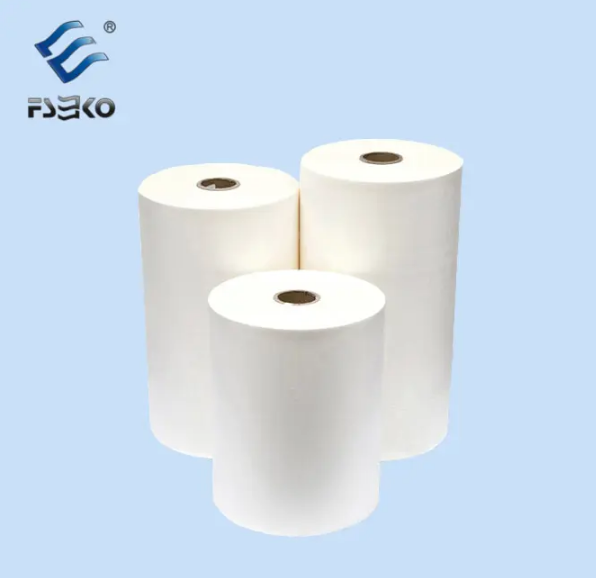
What Makes BOPP Precoated Film the Default Choice
When a print finishing buyer starts evaluating lamination options, BOPP precoated film keeps coming up, not by accident, but because the material properties line up well with the economics of high-volume production. Biaxially oriented polypropylene carries a combination of dimensional stability, moisture resistance, and optical clarity that most alternative substrates struggle to match at a comparable price point. Understanding how it stacks up against its closest competitors helps make the sourcing conversation a lot more concrete.
How the Lamination Mechanism Differs Across Film Types
Precoated films rely on a heat-activated adhesive layer applied during manufacturing, which means the press operator doesn't need to manage a wet glue system. That distinction matters on fast-running equipment. Wet-glue lamination requires a separate adhesive coating station, solvent management, and drying time, all of which add complexity and floor space. BOPP precoated film processes at typical nip temperatures between 80°C and 120°C depending on the adhesive formulation, and the bond develops within seconds under pressure. PET-based precoated films follow a similar mechanism but operate at higher temperatures due to PET's higher melting point, which can stress heat-sensitive substrates like thin uncoated papers.
Comparing Core Film Options Side by Side
The lamination film market offers several substrate families, and each has its own performance envelope. The comparison below covers the most commonly specified options in commercial print and packaging.
| Film Type | Thickness Range | Gloss Clarity | Moisture Resistance | Relative Cost | Heat Requirement |
|---|---|---|---|---|---|
| BOPP Precoated | 12-30 micron | High | Excellent | Low | 80-120°C |
| PET Precoated | 12-25 micron | Very High | Excellent | Medium-High | 120-150°C |
| Nylon (PA) | 15-25 micron | Medium | Moderate | High | 130-160°C |
| Wet Glue BOPP | 20-40 micron | High | Good | Low-Medium | Ambient + drying |
| Non-Plastic Film | 15-25 micron | Variable | Moderate | High | 90-130°C |
BOPP's cost advantage is substantial in flat comparison, but that number shifts when the application involves aggressive post-lamination finishing. Heavy embossing, deep die-cutting, or environments with wide temperature swings can push buyers toward PET or nylon for the added tear strength.
Where BOPP Precoated Film Has Genuine Limitations
Honest evaluation means acknowledging where the material falls short. BOPP precoated film is not the right call for packaging that will face extended outdoor UV exposure without additional protective coatings, because the base polypropylene is susceptible to chalking over time. It also performs poorly in applications requiring heat resistance above roughly 100°C, such as food packaging that goes into microwave-compatible trays.
A packaging converter in southern China running gift box production discovered this directly when a batch of premium boxes returned from a trade show with film adhesion failures along folded edges. The investigation traced back to a mismatch between the precoated film specification and the adhesive formulation used for the folding carton's surface treatment. Switching to a formulation with a higher peel strength resolved the issue, but the episode underlined how substrate-adhesive compatibility deserves as much attention as the film type itself.
When PET Precoated Film Justifies the Premium
For applications where optical performance is the primary driver, PET precoated film earns its higher price. The base refractive index of PET produces slightly richer gloss levels and sharper shadow definition in embossed foil combinations. Luxury packaging designers working on cosmetics and spirits categories often specify PET on the outer panel precisely for this reason. The tradeoff is processing temperature, which requires confirming that the laminator's nip rolls and heat drum can sustain consistent output without temperature drift.
According to testing data published by the Flexographic Technical Association, surface gloss measurements (measured at 60 degrees by ASTM D2457) for PET-based laminates averaged 85 to 95 GU versus 70 to 80 GU for equivalent BOPP-based films under identical processing conditions.
Matching the Specification to the Job
The default answer is rarely the right answer for every run. BOPP precoated film handles the bulk of commercial print lamination because its price-to-performance ratio holds up well across a wide range of substrates and print processes. PET earns consideration when optical performance or thermal resistance is non-negotiable. Non-plastic alternatives are gaining traction for sustainability-driven briefs, though they currently carry higher cost and require more process adjustment.
EKO covers this full material spectrum, from standard BOPP precoated to specialty inkjet and non-plastic formulations, with the production consistency that comes from running the same product lines for close to two decades.