 EN
EN


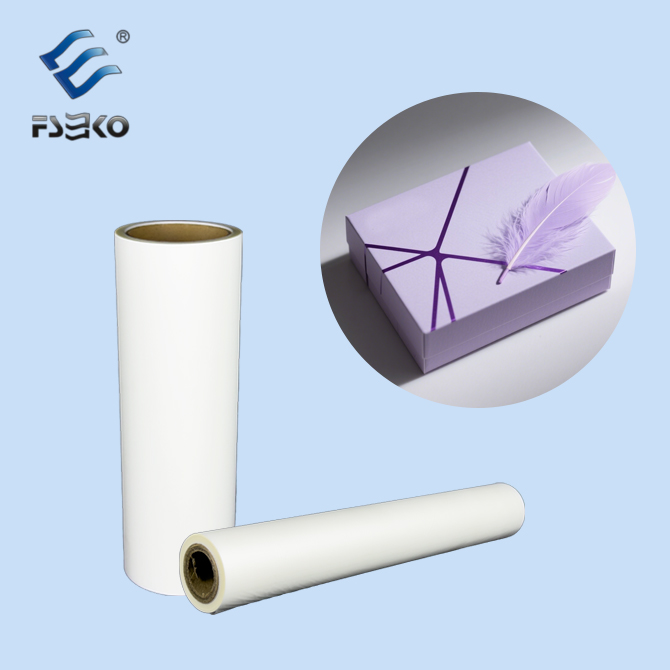
The Cost of Cutting Corners Isn't What It Seems
Walk through any mid-sized print shop and the lamination film rolls stacked near the finishing station all look roughly the same. White cores, clear film, some labeling. The price per roll varies, sometimes by a lot, but the visual difference is minimal. That's precisely why so many operations default to the cheaper option without a second thought.
The trouble is, lamination failures don't announce themselves during the initial pass through the rollers. They show up later—when a finished job gets trimmed and the edges start to separate. When a client unboxes a shipment and finds bubbling across the cover. When a retail display arrives at a store location with visible delamination along the folds.
A commercial printer in the Southeast ran into exactly this scenario. The shop had been sourcing thermal film from a budget supplier for about two years, saving roughly 15% on material costs compared to their previous vendor. Everything seemed fine until a high-volume run of 20,000 retail catalog covers started delaminating at the spine after binding. The cause traced back to inconsistent adhesive coating weight on that particular batch of film. The shop ended up reprinting the entire job and eating the cost of expedited shipping to meet the client's deadline.
The savings on film didn't just evaporate. They turned into a substantial loss.
What "Quality" Actually Means in a Lamination Context
High quality hot lamination films are defined by three variables that aren't obvious from looking at the roll: thickness uniformity, adhesive consistency, and thermal stability.
Thickness uniformity matters because lamination equipment applies heat and pressure across the full width of the web. If the film varies by more than a couple of microns from edge to edge, the pressure distribution becomes uneven. The result shows up as patchy adhesion—some areas bond properly while others lift or bubble. Digital print applications are especially sensitive to this because the toner or ink layer sits on the surface and requires consistent pressure to fuse correctly.
Adhesive consistency is arguably the bigger factor. High quality films use EVA or acrylic formulations that are applied with precise coating weight control across the entire roll width. Inconsistent coating creates dry spots where adhesion fails entirely, or adhesive bleed at the edges where excess glue oozes out during lamination. These defects often remain invisible until the finished piece is cut or folded, at which point rework becomes expensive or impossible.
Thermal stability determines how the film behaves across different operating temperatures. A well-formulated film maintains its adhesive properties across a range of heat settings, giving operators flexibility without sacrificing bond strength. Lower-quality films have narrow operating windows—too cool and the adhesive doesn't activate, too hot and the film wrinkles or the adhesive degrades.
The Real Numbers Behind Film Quality
The gap between high quality and commodity lamination films becomes quantifiable when you track operational metrics over time.
| Performance Metric | High Quality Film | Commodity Film |
|---|---|---|
| Batch-to-batch thickness variation | ±2 microns | ±5 microns or more |
| Reject rate (typical shop floor) | 1–2% | 5–8% |
| Adhesive activation temperature range | 85–130°C | 95–120°C (narrow window) |
| Formulation change frequency | Documented, rare | Unannounced, unpredictable |
These differences translate directly to the bottom line. A shop running 5,000 square feet of lamination per week with a 5% reject rate scraps 250 square feet of finished material weekly—plus the labor to produce and rerun those jobs. Cut that reject rate to 1% and the annual savings easily reach five figures for a mid-size operation.
A Converter's Wake-Up Call on Formulation Stability
The Pacific Northwest packaging converter mentioned earlier made a decision that many shops face: switch to a lower-cost supplier or maintain the relationship with a more expensive but consistent vendor. The company chose the cheaper option and operated without issues for eighteen months. Then a single production run of tens of thousands of retail packaging units experienced catastrophic delamination after shipment.
The root cause analysis traced back to a change in the supplier's adhesive formulation. The supplier had switched to a lower-cost EVA resin without notifying customers. The new formulation lacked the adhesion profile required for the converter's high-speed lamination equipment. The converter absorbed substantial reprint and expedited shipping costs, plus the loss of the client's trust. The upfront savings were not worth the operational risk.
That converter transitioned to a supplier with documented quality systems and a track record of formulation stability, accepting a higher per-unit cost in exchange for predictable performance.
Industry Benchmarks That Separate the Serious from the Casual
ISO 29804:2009 provides a standardized framework for evaluating tensile bond strength of adhesives. While this standard applies broadly across adhesive applications, the principle behind it—consistent, measurable adhesive performance—directly applies to thermal lamination film evaluation.
Suppliers who maintain documented quality control data across production runs demonstrate a commitment to repeatability that commodity vendors rarely match. The difference shows up in batch-to-batch consistency. A reliable supplier ensures that the film delivered in December performs identically to the film delivered in June. Without this repeatability, every new roll becomes a troubleshooting exercise.
This is where manufacturers with established production infrastructure separate themselves from the competition. Companies that have invested in co-extrusion processes and laser-guided thickness monitoring systems are better equipped to maintain consistency across production runs. The equipment alone doesn't guarantee quality, but it enables the process control that consistent film requires.
When to Pay More and When to Push Back
Not every application demands top-tier film. Short-run internal documents, proofing materials, or one-off presentations can often get by with mid-range products. The decision should be driven by the end use: what happens if the lamination fails?
For client-facing deliverables, retail packaging, or any application where the finished piece represents the brand, high quality hot lamination films are not optional. The cost differential between a premium film and a commodity product is small relative to the cost of a failed job. For operations that run high volumes on automated equipment, the consistency of a quality film reduces downtime and waste in ways that directly improve throughput.
Print shops and converters that have been burned by film failures tend to become selective about their sources. They test new suppliers with small orders before committing to volume purchases. They track reject rates by batch and vendor. They ask about raw material sourcing and formulation change protocols. These practices aren't overkill—they're the result of learning the hard way that film quality isn't visible from the outside.
Guangdong EKO Film Manufacture Co., Ltd. has built its manufacturing approach around these exact considerations. With over 19 years in the industry, the company maintains documented quality systems and production protocols that prioritize batch-to-batch repeatability. The focus on process control and formulation stability reflects an understanding that consistent performance matters more than per-roll pricing in the long run.