 EN
EN


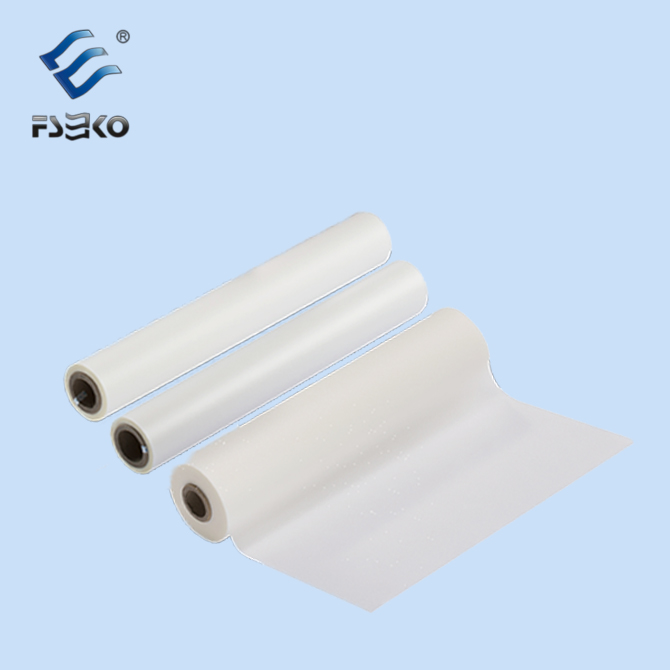
Thermal lamination has been a finishing staple for decades, but the conversation around BOPP (biaxially oriented polypropylene) film has shifted. It's no longer just about keeping prints safe from fingerprints and coffee spills. The real question is what BOPP thermal laminator film does for a business's operational efficiency, brand perception, and long-term profitability.
BOPP-based thermal lamination films are projected to witness the highest growth within the thermal lamination film market over the forecast period. That trajectory isn't driven by protective qualities alone—it reflects a broader recognition that finishing choices directly impact everything from production throughput to customer retention.
The Cost Equation That Few Shops Calculate Correctly
Most print operations calculate lamination cost per square foot and leave it at that. But that narrow view misses the bigger picture. A more complete cost analysis includes waste reduction, rework rates, equipment downtime, and the cost of dissatisfied clients.
BOPP thermal laminator films offer several advantages that affect these hidden cost drivers:
Consistent adhesive laydown means fewer rejects from bubbling or delamination, which translates directly to lower material waste.
No drying or curing time after lamination enables immediate downstream processing and faster time-to-market.
Lower energy consumption compared to solvent-based or cold laminating alternatives reduces operating costs per run.
Wide operating windows on temperature and pressure settings mean less downtime for machine adjustment between job types.
The numbers add up. A printer running 5,000 square feet of BOPP lamination per week at a 5% reject rate is scrapping 250 square feet of finished material weekly—plus the labor to produce and re-run those jobs. Cut that reject rate to 1%, and the annual savings easily reach five figures for a mid-size shop.
What Brands Actually Pay For: The Tactile Factor
Brand owners have become more sophisticated about packaging and print finishing. They understand that consumers make judgments about product quality within seconds of handling it. The feel of a printed piece matters as much as how it looks.
BOPP thermal lamination film delivers a range of finish options that directly influence perceived value:
Gloss finishes enhance color saturation and brightness, making images pop on retail shelves.
Matte finishes provide a sophisticated, non-glare surface that reads as premium and professional.
Soft-touch versions add a velvet-like texture that signals quality before the customer even reads the label.
Market research confirms the trend: BOPP films are particularly valued in food and beverage packaging, where high-clarity films provide both product protection and branding impact. A package that looks good and feels good commands higher price points and drives repeat purchases.
Protection That Pays for Itself in the Real World
Consider a mid-sized packaging converter in the Midwest that supplies printed folding cartons to a regional grocery chain. The converter switched from an uncoated board finish to BOPP thermal lamination for a line of premium frozen food boxes. The immediate benefit was visual—the colors appeared richer and more consistent across the run.
But the real payoff came further down the supply chain. The chain supermarket reported that the damage caused by moisture condensation during cold chain transportation and the damage resulting from scratches during shelf restocking have significantly decreased. The converter's customer retention rate for that product line improved, and the grocery chain expanded the laminated packaging to additional product categories.
That's the kind of outcome that doesn't show up on a per-square-foot cost calculation but matters enormously to the bottom line.
Industry Standards and What They Reveal
ISO 29804:2009 specifies procedures for determining tensile bond strength of adhesives, providing a standardized framework for evaluating lamination performance. While this standard applies broadly, the principle behind it—consistent, measurable adhesive performance—is directly relevant to BOPP thermal laminator film selection.
Certifications like RoHS, REACH, and food contact material compliance have become baseline requirements in many markets. These aren't just regulatory boxes to check. They signal a manufacturer's commitment to material safety and quality control, which matters when printed materials end up in food packaging or children's products.
To put these advantages into perspective, the table below contrasts BOPP thermal lamination with alternative finishing approaches across key business-impact metrics.
| Metric | BOPP Thermal Lamination | PET Thermal Lamination | Cold Lamination |
|---|---|---|---|
| Per‑square‑foot material cost | Lower | Moderate | Higher |
| Post‑lamination processing | Immediate (no cure) | Immediate (no cure) | Delayed (cure required) |
| Energy consumption per run | Low | Moderate | High (solvent evaporation) |
| Surface finish options | Gloss, matte, soft‑touch | Gloss, matte | Limited (mostly gloss) |
| Scuff/moisture resistance | Excellent | Excellent | Good |
| Operator adjustment time | Minimal (wide window) | Moderate | High (narrow window) |
Where BOPP Film Doesn't Fit: Honest Limitations
BOPP thermal laminator film isn't the right choice for every application. It's not recommended for heat-sensitive substrates that can't withstand the activation temperatures typically required. Certain synthetic materials and some UV-inkjet outputs may require PET-based films or cold lamination alternatives instead.
For inkjet applications specifically, standard BOPP films may struggle with adhesion due to the porous nature of inkjet-receptive coatings. This is where inkjet-specific BOPP formulations—with modified adhesive systems and lower activation temperatures—become necessary.
The key is matching the film to the substrate and the printing technology, not assuming BOPP works everywhere.
The Supply Chain Advantage of Consistent Quality
Finishing consistency depends on more than just the film itself. It depends on reliable supply, batch-to-batch uniformity, and technical support that understands how the film behaves on different equipment.
Manufacturers with ISO 9001 certification and established quality management systems provide a level of predictability that matters in production environments. When every roll of BOPP thermal laminator film delivers the same adhesive performance, the same optical clarity, and the same thickness tolerance, production teams can focus on throughput rather than troubleshooting.
Guangdong EKO Film Manufacture Co., Ltd. has built its reputation on this kind of manufacturing discipline, with over 19 years of dedicated R&D and production experience in the thermal lamination space.