 EN
EN


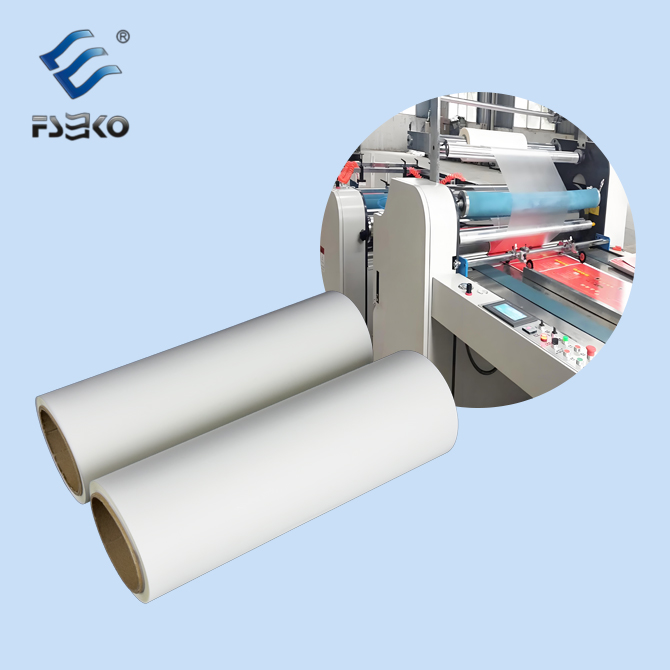
The Invisible Variable in Production Stability
Thermal lamination film sits at an awkward intersection in commercial printing. When it works correctly, nobody notices—the finished piece just looks good and holds up. When it fails, the consequences cascade through the entire operation: reprints, delayed shipments, client frustration, and margin erosion. The global thermal lamination films market was valued at roughly $3 billion in 2024 and continues to expand, but within that growing market the gap between reliable manufacturers and commodity suppliers has widened considerably. Price per square meter remains the primary decision factor for many buyers, yet the hidden costs of inconsistent quality often dwarf any upfront savings. Choosing a supplier is not about finding the lowest quote—it’s about finding a partner who can deliver predictable performance, roll after roll, batch after batch.
What Reliability Actually Looks Like
Reliability in a thermal lamination supplier manifests across several dimensions, none of which appear on a typical quote sheet. Process control is the most visible indicator. High-speed lamination equipment requires film thickness held to tight tolerances—typically within a couple of microns for digital print applications. A film that varies by five microns across a roll will produce uneven pressure distribution, showing up as patchy adhesion or visible ridges in the finished product. Suppliers using co-extrusion processes and laser-guided thickness monitoring systems are better equipped to maintain this consistency across production runs. Adhesive uniformity matters just as much. The EVA or acrylic adhesive layer must be applied with even coating weight across the entire web width. Inconsistent coating creates dry spots where adhesion fails, or adhesive bleed at the edges where excess glue oozes out during lamination. These defects are often invisible until the finished piece is cut or folded, at which point rework becomes costly or impossible.
A Converter’s Wake-Up Call
A packaging converter in the Pacific Northwest learned this lesson the hard way. The company had been sourcing thermal lamination film from an offshore supplier offering a price significantly below domestic competitors. For eighteen months, the arrangement worked—or seemed to. Then a single production run of tens of thousands of retail packaging units experienced catastrophic delamination after shipment to the client. The root cause analysis traced back to a change in the supplier’s adhesive formulation. The supplier had switched to a lower-cost EVA resin without notifying customers, and the new formulation lacked the adhesion profile required for the converter’s high-speed lamination equipment. The converter absorbed substantial reprint and expedited shipping costs, plus the loss of the client’s trust. The supplier offered a credit for the faulty film and assured the converter the issue would not recur. But the converter had already made a decision: the upfront savings were not worth the operational risk. The company transitioned to a supplier with documented quality systems and a track record of formulation stability, accepting a higher per-unit cost in exchange for predictable performance.
Batch-to-Batch Repeatability: The Underrated Factor
Perhaps the most underestimated factor in supplier selection is batch-to-batch repeatability. A reliable supplier ensures that the film delivered in December performs identically to the film delivered in June. This requires rigorous raw material sourcing, documented production protocols, and in-line quality verification. Without this repeatability, every new roll becomes a troubleshooting exercise—a costly and time-consuming distraction from productive work. Shops that have experienced formulation drift without warning know exactly how disruptive this can be. One production manager described it as “playing roulette with every pallet.” The solution is straightforward: suppliers who can demonstrate consistent performance through documented quality control data are worth the premium.
Evaluating Supplier Capability: A Framework
Procurement professionals evaluating thermal lamination suppliers should move beyond price comparison and assess capability across core dimensions. The following framework provides a practical starting point:
| Evaluation Dimension | What to Look For | Red Flags |
|---|---|---|
| Process Control | In-line thickness monitoring, documented tolerances, co-extrusion capability | Vague quality claims, no published spec sheets |
| Adhesive Consistency | Documented coating weight specs, batch sampling records | Inconsistent finish, edge bleed on sample rolls |
| Raw Material Sourcing | Transparent supply chain, documented resin sources | No visibility into material origins |
| Technical Support | Application engineering expertise, sample testing, troubleshooting assistance | No technical staff, samples not offered |
Quality certification like ISO 9001 provides a baseline, but it’s not a guarantee. The real test is whether the supplier can provide documented evidence of process control and demonstrate a track record of formulation stability. Shops that incorporate these criteria into their vendor selection process consistently report fewer production surprises and lower overall operating costs.
The Technical Capability Question
Beyond quality systems, technical capability matters in ways that aren’t always obvious. Material compatibility is the first consideration: thermal films require heat-activated adhesives, and not all films bond equally well to all substrates. Thickness range is another factor—typically from around 75 to 250 micrometers, but specific applications may require tighter specifications. Customization capability also signals a supplier’s level of technical maturity. Suppliers who can offer variable widths, specialized packaging formats, and custom finishing options are generally better equipped to handle the range of demands that commercial print shops encounter. These capabilities don’t just make life easier—they reduce the number of workarounds and compromises that eat into productivity.
The Cost of Getting It Wrong
The true cost of an unreliable supplier goes far beyond the price of the film itself. Waste from adhesion failures, reprints from quality rejects, labor hours spent troubleshooting, expedited shipping for replacement rolls, damaged client relationships—these costs compound quickly. A supplier that delivers consistent quality at a slightly higher price often turns out to be the more economical choice over a full production cycle. The converter in the Pacific Northwest learned this after absorbing costs that far exceeded the initial savings from the cheaper film. The lesson applies across the board: in thermal lamination, predictability is worth paying for.
Finding the Right Partner
Manufacturers with established quality systems and a track record of serving export markets are better positioned to deliver the consistency that production teams depend on. EKO, for example, operates with ISO 9001 certification and holds multiple patents in lamination film technology, reflecting a commitment to process control and product innovation. With over a hundred countries in its export network and annual production capacity in the thousands of tons, the company represents the kind of scale and quality infrastructure that serious buyers look for. But the principle applies broadly: supplier selection in thermal lamination is not a commodity buying exercise. It’s a strategic decision that affects production stability, client satisfaction, and ultimately, the bottom line.