 EN
EN


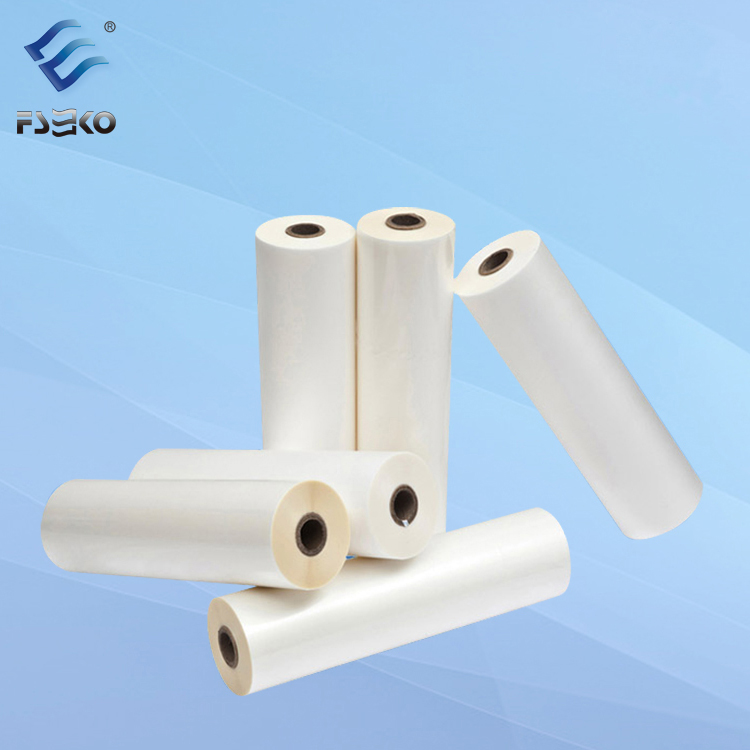
Why Durable PET Thermal Lamination Film Enhances Long-Term Product Reliability
The durability–lifespan link: How molecular stability prevents premature failure
PET thermal lamination film lasts much longer because its polymer chains are naturally stable and don't break down easily. The film's crystal structure helps it withstand heat above 85 degrees Celsius and UV light without developing tiny cracks, cloudiness, or losing its stickiness. This stability means products stay intact for far longer since they won't peel apart at the edges. We see this advantage in places where materials get lots of wear and tear, like factory floor labels or store window signs. Tests show these films keep over 90% of their sticking power even after sitting outside for five whole years, which cuts down on how often businesses need to replace them by about two-thirds according to research from Polymer Degradation Studies in 2023. Plus, since there are no plastic additives added during manufacturing, the material doesn't become brittle over time, so it keeps protecting surfaces from scratches and chemicals consistently year after year.
Real-world validation: 5-year automotive display data showing 3.2× lifespan extension
Automotive touchscreens endure extreme conditions: thermal cycling (–40°C to 105°C), intense UV radiation, and mechanical abrasion from daily use. A 5-year field study of commercial vehicle displays confirmed that durable PET thermal lamination film extended operational lifespan by 3.2× versus non-laminated units. Key findings include:
| Performance Metric | Non-Laminated | PET-Laminated | Improvement |
|---|---|---|---|
| Average lifespan | 2.5 years | 8 years | 220% |
| Touch sensitivity loss | 47% | 9% | 5.2× less |
| Optical clarity reduction | 35% | 4% | 8.7× less |
The film's hydrolytic stability prevented moisture-induced haze, while cross-linked surface coatings retained >99% scratch resistance after 200,000 actuations—validating its performance in mission-critical environments.
Resisting Environmental Degradation: Hydrothermal Stability of Durable PET Thermal Lamination Film
Hygrothermal aging mechanisms: Humidity, heat, and hydrolytic chain scission in standard vs. stabilized PET
Regular PET films tend to break down pretty quickly when exposed to both heat and moisture together. What happens is that water actually gets into the plastic structure, causing what's called hydrolysis where water molecules literally cut apart the long molecular chains. When we look at conditions around 85 degrees Celsius with 85% relative humidity, studies from Polymer Degradation Studies back in 2023 showed something alarming: the molecular weight drops between 40 to 60 percent after just about 500 hours. This kind of degradation makes the material brittle and causes layers to separate. The good news comes with stabilized PET thermal lamination films. These special versions fight off degradation by changing their crystal structure and adding substances that repel water. Tests show these modifications can cut water absorption rates by roughly 70%, which means they hold up much better in tough spots like car dashboards or inside commercial kitchen equipment where temperature and humidity fluctuations are constant problems.
Engineering resilience: Co-polymer modification and moisture-barrier additives for long-term integrity
Advanced PET formulations achieve hydrothermal stability via two synergistic innovations:
- Co-polymer integration: Introducing cyclic monomers into PET chains increases steric hindrance, slowing hydrolysis by 3.2× compared to conventional films
- Nano-barrier technology: Dispersed silicate particles create tortuous pathways for moisture vapor, reducing transmission rates below 0.8 g/m²/day
These enhancements enable the film to retain >90% tensile strength after 2,000 hours at 95% relative humidity—ensuring multi-year reliability for outdoor electronics, medical devices, and other moisture-sensitive applications.
Mechanical Endurance: Tear, Puncture, and Flex Resistance in Durable PET Thermal Lamination Film
Durable polyethylene terephthalate (PET) thermal lamination film delivers exceptional mechanical endurance through engineered resistance to tearing, puncturing, and repetitive bending—critical for automotive interiors, industrial labels, and medical device packaging.
Quantifying Wear Retention: Surface-Treated Films Maintain >92% Tear Strength After 10,000 Flex Cycles
Plasma treatment and nano-coating technologies strengthen interfacial molecular bonding, enabling treated films to retain over 92% of original tear resistance after accelerated testing simulating 10,000 flex cycles. This performance prevents delamination under vibration or impact stress—common failure modes that degrade standard films within months in electronics and wearable applications.
Balancing Performance: Advanced Coatings That Boost Abrasion Resistance Without Sacrificing Lamination Adhesion
Cross-linked silicone coatings increase surface hardness by 40% to resist scratches while maintaining peel adhesion above 8 N/cm. This eliminates the traditional trade-off between protection and bond integrity, ensuring consistent, high-yield lamination—even over textured substrates or curved surfaces.
FAQ
What makes PET thermal lamination film durable?
PET thermal lamination film is durable due to its stable polymer chains and crystal structure, allowing it to withstand heat, UV light, and mechanical stress without breaking down.
How does PET thermal lamination film extend product lifespan?
The film maintains its stickiness, optical clarity, and scratch resistance over time, significantly reducing the need for frequent replacements and prolonging product lifespan.
Why is PET film effective against environmental degradation?
Recent film enhancements include modifications to crystal structures and the addition of water-repelling substances, significantly reducing water absorption and preventing degradation caused by humidity and heat.
What are the practical applications of PET thermal lamination film?
It is used in various applications including automotive touchscreens, medical devices, industrial labels, and electronic packaging where durability and clarity are crucial.
How does PET film maintain mechanical endurance?
Through advanced engineering techniques like plasma treatment and nano-coating, PET films retain high tear resistance, tear strength, and adhesion, even under heavy use.