 EN
EN


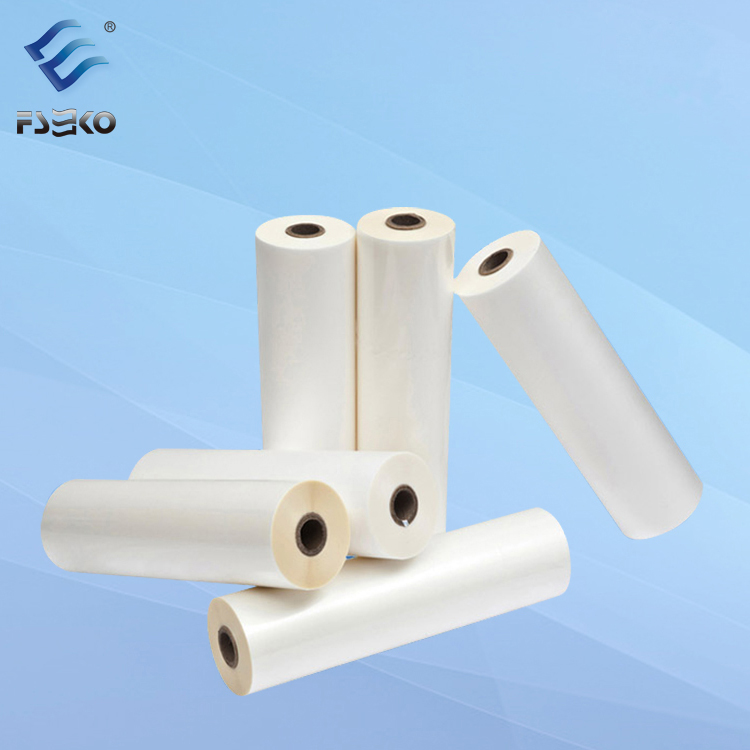
How Durable PET Thermal Lamination Film Extends Shelf Life Through Barrier Integrity
Moisture, Oxygen, and UV Barrier Mechanisms in High-Performance PET Laminates
PET thermal lamination films with high barrier properties significantly increase product shelf life by providing protection at the molecular level. What makes these films effective is their crystalline structure which limits how gases pass through them. Oxygen transmission rates typically range from 0.5 to 1.5 cc per square meter per day, something really important for things like medicines and food products sensitive to oxygen exposure. When it comes to moisture control, special coatings help keep moisture vapor transmission rates under 0.8 grams per square meter per day, even when tested under harsh conditions of 40 degrees Celsius and 90% humidity. This prevents spoilage caused by excess moisture. Products sensitive to UV light, such as certain supplements and functional foods, benefit from built-in light absorbers that stop almost all UVA and UVB rays below 380 nanometers, helping preserve nutrients over time. All these protective layers work together too. Oxygen scavengers boost what PET already does well against gas, while tiny silica coatings strengthen moisture resistance without making the packaging look cloudy or dull.
Validating Long-Term Protection: Accelerated Aging Tests (ASTM F1980, ISO 11607)
When we want to see how materials hold up over time, accelerated aging tests basically squeeze decades worth of wear and tear into just a few weeks. According to ASTM F1980 guidelines, PET laminates get put through their paces at 60 degrees Celsius continuously, with close monitoring of both seals and barrier properties during this process. The better quality formulations maintain around 95% of their original barrier effectiveness even after simulating three whole years of aging conditions. That's pretty impressive when compared to regular laminates that only manage about 70%. For sterility checks under ISO 11607 standards, gamma irradiation tests go all the way up to 50 kGy doses. Surface modified PET films come out clean with zero instances of delamination, whereas untreated samples had a worrying 12% failure rate. All these established testing methods give us shelf life estimates that are typically within plus or minus 5% accuracy. This kind of precision matters a lot for meeting regulations and setting proper expiration dates, especially in industries where product reliability can literally be a matter of life or death.
Real-World Degradation Challenges Across Critical Industries
Food Packaging: Hydrolytic Degradation Under Sterilization and Humidity Stress
When retort sterilization at around 121 degrees Celsius meets high humidity levels, it speeds up the breakdown of packaging materials. Moisture actually breaks down those ester bonds in PET plastics, causing molecular weight reductions somewhere between 30 to 40 percent after about half a year in lab tests. What happens next is pretty concerning for food safety. The weakened material simply cannot block oxygen effectively anymore. Just a tiny amount of moisture getting through, maybe as little as one tenth of a percent, might lead to spoilage issues or bad flavors developing in dried soups and pre-cooked meals stored long term. Fortunately, there's a solution available today. Durable PET thermal lamination films fight back against these problems thanks to their compact crystal structures that slow down water movement. These films stay flexible too, so they work well during multiple heating processes without cracking or losing effectiveness.
Medical Device Packaging: Gamma Irradiation and Seal Integrity Loss
When gamma irradiation hits polymers at doses between 25 and 50 kGy, it creates free radicals that start breaking down the material. These radicals cause oxidation in polymer matrices leading to problems like chain scission, surface brittleness, and significant loss in peel strength often over 30% according to ASTM F88 standards. What makes this really problematic? The degradation affects sterile barrier systems where even tiny defects in medical implant packaging can lead to massive recalls. We're talking about costs that reach around $740,000 per incident as reported by the Ponemon Institute back in 2023. Fortunately, newer PET laminates now include special additives designed to tackle those free radicals right where they form. This helps maintain proper seal integrity and keeps dimensions stable throughout the product's shelf life, which is exactly what manufacturers need when dealing with sensitive medical applications.
Enhancing Durability: Surface Treatments and Interfacial Engineering for PET Lamination
Plasma and Corona Pre-Treatment to Stabilize Adhesion and Resist Delamination
PET surface treatment with plasma and corona processes works both chemically and physically to boost how well laminates stick together at their interfaces. These treatments raise surface energy levels by carefully controlling oxidation reactions on the material. What happens next? Reactive carbonyl and hydroxyl groups get created, which then bond covalently with whatever adhesive gets applied during the lamination process. At the same time there's also some gentle roughening of the surface that helps create better mechanical locking between layers. When all these factors come together, we end up with a much stronger PET thermal lamination film. Tests show that peel resistance goes up more than 50% when subjected to accelerated aging conditions. And here's the kicker: this improvement doesn't come at the cost of creating weak spots where moisture might seep in or problems arise from repeated heating and cooling cycles.
The main factors to watch during processing are discharge power levels ranging from 1 to 5 kW per square meter, exposure durations between 0.1 and 5 seconds, plus the type of gas used which can be air, oxygen, or nitrogen. Each of these elements affects how densely functional groups form and how deep the treatment penetrates the material. Get these settings right and the result is consistent adhesion all over the film surface. This kind of uniform bonding helps maintain the protective barrier properties for at least five years without costing much extra money in production costs. Most manufacturers find this balance between performance and expense very appealing when scaling up operations.
Optimizing Lamination Process Parameters for Maximum Longevity
Getting the right balance of temperature, pressure, and line speed is essential if we want durable PET thermal lamination films to last as long as they should. When temperatures go over 150 degrees Celsius, the adhesive starts breaking down. And if the nip pressure drops below 40 pounds per square inch, there's a real risk of layers peeling apart when exposed to heat or moisture. Most people find good results somewhere between 120 to 150 degrees Celsius with pressures ranging from 40 to 60 psi. This range creates strong bonds without damaging the base material. Going too fast on production lines, say above 150 meters per minute, tends to mess up the coating consistency which leads to weak spots forming faster than expected. Testing according to ASTM F1980 standards shows that when these parameters are set correctly, oxygen transmission rates stay under 1.5 cubic centimeters per square meter per day even after two years. That meets strict industry standards needed for things like medicine packaging and food products that need extended shelf life. Keeping an eye on how sticky the adhesive remains during operation and making sure rollers are calibrated regularly helps catch those small issues before they turn into bigger problems down the road.
FAQ
What are PET thermal lamination films?
PET thermal lamination films are protective films used to enhance the durability and shelf life of products by providing moisture, oxygen, and UV barriers.
How do PET films enhance product shelf life?
They have a crystalline structure that limits gas transmission and various coatings that protect against moisture, oxygen, and UV light, preserving the product for longer.
What industries benefit from durable PET laminates?
Industries like food packaging, pharmaceuticals, and medical devices benefit from PET laminates due to their barrier properties against environmental factors.
Table of Contents
- How Durable PET Thermal Lamination Film Extends Shelf Life Through Barrier Integrity
- Real-World Degradation Challenges Across Critical Industries
- Enhancing Durability: Surface Treatments and Interfacial Engineering for PET Lamination
- Optimizing Lamination Process Parameters for Maximum Longevity
- FAQ