 EN


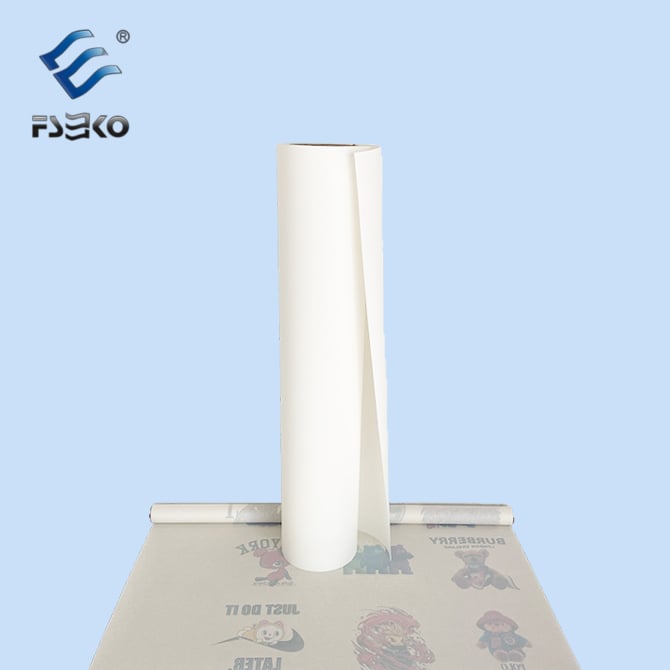
Duo pelliculae utraque verbum ‘clear’ in titulo ferre possunt et in rotulo idem aspectum habere, tunc vero in tabella impressa sub lucerna emporii prorsus aliter se gerere. Una in imagine evanescit. Altera tenue opacitatem relinquit quae nigrum locupletem in carbonem mollem convertit et fundo albo umbram griseam imprimit quam nemo postulavit. Hoc interstitium non est lapsus in custodia qualitatis apud conversorem. Est differentia inter pelliculam basim quae ad opticas functiones fabricata est et pelliculam merceariam quae simpliciter transparens est.
Clarity in a thermal laminate comes from how little the material scatters light. Scattering is driven by crystallinity, surface roughness, and the additive package used to keep the film from blocking on the roll. Slip agents and antiblock particles do their job at the winding stage, but they also bump up haze. A film formulator has to trade those properties off against each other, and the trade-off is where clear PET thermal lamination film separates itself from the pile.
What a Polyester Base Actually Brings
Biaxially oriented polypropylene has been the workhorse of thermal lamination for decades, and for plenty of jobs it still makes sense. Polyester, though, brings a different set of mechanical properties to the same process. PET has noticeably higher tensile strength at the same gauge, a higher softening point, and much better dimensional stability under heat and tension.
Id hoc magis valet quam primo apparet. Lamina quae sub pressione paululum cedit aut distenditur tendit ad ostendere derivationem registrationis in stricto recisione formae, et potest involvi cum folium per impressorium laseris vel unitatem thermicam foliorum aurati transiret. Polyester manet dimensiones suas per hos processus. Maior resistentia caloris etiam spatium superaddit in ipsa fenestra laminandi, ita ut adhaesivum ad plenum fluxum perducatur sine eo ut pellicula portans incipiat mollisci aut deformari. BOPP, quod est mollius et elasticius, magis indulget in curvaturis strictis sed minus stabile est ubi opus precisionem et durabilitatem thermicam postulat.
Est etiam angulus tractationis. PET est rigidiore, ideo praedictabiliter magis transit per automaticas laminatorias foliorum et planius iacet in acervo. In valde tenuibus cartis extra rigiditas contra te operari potest, quod est limitatio quae nominanda est ab initio, sed in tabulis cartonum, in tegminibus et in substratis signorum rigiditas saepe est commodum.
The Optical Numbers That Separate a Good Film from a Great One
Haze and gloss are the two measurable values that predict how a laminate will look on press output. Haze measures the percentage of light scattered rather than transmitted straight through. Gloss measures how much light reflects off the surface at a defined angle. Both have standardized test methods, and both can be requested from a supplier as a documented number.
| Optical and Physical Marker | Standard Clear Film | High-Clarity PET Film |
|---|---|---|
| Haze, typical measured value | Higher, often noticeable on black solids | Engineered lower, image stays crisp |
| Surface gloss, 45 degree reading | Moderatus | Higher, more depth on photographic work |
| Stabilitas dimensional sub calor | Potest distendi aut convolvi | Manet per calidas posteros gradus |
| Comportamentum in stricta registratione die-cut | Aliquid drift possibile est | Registrationem praedictiorem habet |
| Rigiditas et planitudo in acervo | Mollis, magis conformabilis | Rigidior, bene alimentat in lineis foliorum |
| Pretium per rotulam | Inferior | Higher, offset by appearance and yield |
The gloss reading is the one that gets overlooked most often. A low-haze film with a dull surface still looks flat, especially on dark imagery where the difference between a deep black and a washed-out one is largely a function of surface reflectance. High-clarity polyester with a well-controlled surface finish gives photographic prints and premium packaging that wet, saturated look that customers respond to without being able to explain why.
A Display Graphics Shop Where Haze Turned into a Complaint
A shop producing backlit retail graphics ran a recurring issue on a menu board program. The panels were printed with a white ink base and a dense dark background, then laminated with a clear thermal film that had been used on general signage work for years. On the wall under office lighting, the panels looked acceptable. Backlit in the customer's fixtures, the dark areas read gray and the white areas looked dingy, and the client sent two rounds back.
The film was not defective and the press was in calibration. The issue was haze plus the way a white ink base reflects light through the laminate. The scattered light came back through the image, lifting the blacks and dulling the whites. The fix was to move to a low-haze polyester laminate with documented optical values, verify the activation temperature against the shop's laminator, and confirm the bond on a small run before committing the full program. The replacement film measured within a tight haze tolerance, and the gray cast disappeared. Nothing else in the workflow changed. The lesson was that on backlit and high-contrast work, clarity is a specification, not an aesthetic preference.
Where the Extra Clarity Pays Off and Where It Does Not
Clarum PET lucratur suum pretium in opere ubi imago est productum et quaelibet visibilis diminutio apparet emptori. Imprimenda photographica, emballagia pretiosa ad venditionem, tegumenta librorum, fasciculi praesentationis, et signa retroilluminata vel alti contrastus omnia proficiunt. Etiam opera quae calorem posteriorem experiuntur, ut exempla quae per machinam imprimendi laseris post laminatum aut per gradum aurifodii calidi transeunt, ubi basis polyestera melius sustinet quam subtilior portator polypropyleni.
Honest limits exist. Polyester film costs more than standard BOPP, and on a long-run job where appearance tolerances are loose, that premium may not return anything the customer can see. The extra stiffness that helps on carton board can cause curling on very thin text stocks, and on substrates with tight compound curves, a more conformable film is often the better call. Adhesion still depends on matching the adhesive to the print surface, so a high-clarity film paired with the wrong activation temperature will disappoint regardless of how good its optical values are. Clarity is one variable among several, not a substitute for the rest.
Specifying Clarity with a Number Instead of a Promise
Duo methodus experimentales merentur quaestionem directam. ASTM D1003 tractat nebula et transmittantiam lucidam pro plasticis transparentibus, et ASTM D2457 tractat nitorem specularem pro pelliculis plasticis. Fornitor qui potest citare resultata ex his methodis, una cum detalis de spissitudine et tractatione, dat aequipe productionis aliquid ad comparandum inter candidatos.
Tractatio superficiei etiam meretur mentionem. Superficies PET bene tractata accipit incaustum, adhaesivum, et recubationem UV magis fiducialiter, quod afficit tam adhaesionem quam apparentiam cuiuslibet impressionis post laminatum. Aliud valoris est ambitus activationis definire, quia adhaesivum debet attingere fluxum plenum sine impellere pelliculam ultra punctum ubi incipit distorqueri.
Guangdong EKO Film Manufacture Co., Ltd. has spent over nineteen years developing pre-coated film systems, with a clear PET thermal lamination line built around measured optical performance rather than a general claim of transparency. The operation runs ISO 9001 quality controls across a 6,000-ton annual capacity and supplies converters in more than one hundred countries, which means the film leaving the line has been specified against the same optical and mechanical standards that finishing floors apply on incoming inspection. For a shop that has argued with a customer about why a black looked gray, that kind of documented consistency is worth paying attention to.