 EN


A print shop owner once described the first time a standard thermal film met a stack of HP Indigo sheets. The laminate looked perfect coming off the rollers. Three days later, the edges started lifting like old wallpaper in a humid bathroom. That is not a machine calibration issue or a batch defect. It is a chemistry mismatch, and it plays out in finishing departments more often than most production managers care to admit.
Digital presses do not lay down ink the way an offset unit does. Offset inks are oxidative and bite into the paper fiber, creating a porous, high-energy surface that a conventional ethylene-vinyl acetate adhesive can grab without much drama. Toner behaves differently. HP Indigo uses a liquid electrophotographic process that leaves trace silicone oil on the sheet, while Xerox and similar dry-toner engines build a raised polymer layer that sits on top of the substrate instead of soaking in. Both surfaces sit at a lower surface energy than offset stock, and a standard film adhesive simply cannot wet out and anchor the way it should.
The result is a finishing room that looks busy but is actually running in circles. Bubbles appear within seventy-two hours on a worrying share of jobs. Edge lift shows up after a guillotine trim. A laminate that seems fine in the sample book fails during folding because the adhesive never fully locked into the toner layer. These are not cosmetic annoyances. They are line-down events with a price tag attached.
What Digital Film Lamination Actually Changes at the Adhesive Layer
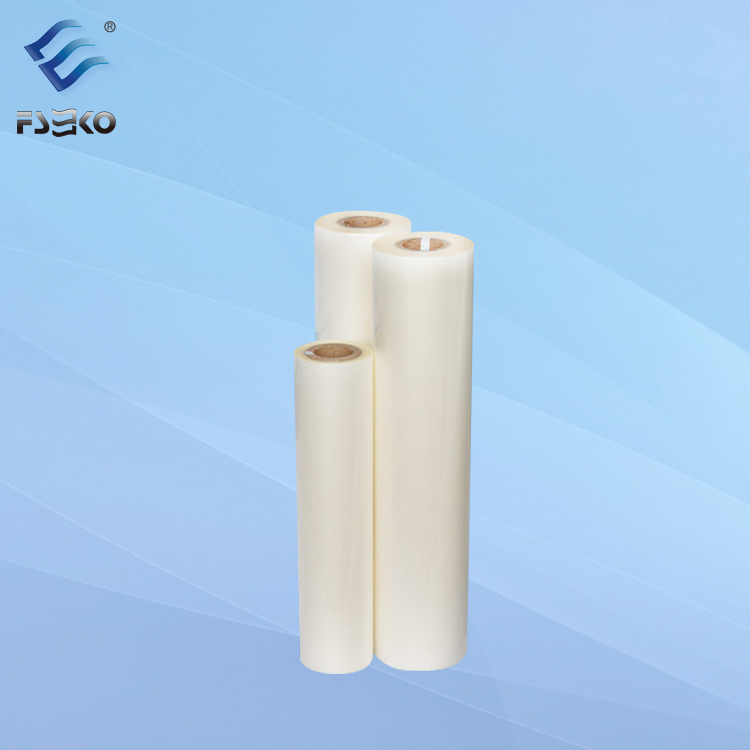
The term digital film lamination gets thrown around loosely, but the functional difference lives in the adhesive system, not the polyester or BOPP carrier sheet. A digital-grade film uses a modified adhesive chemistry with a higher tack and a narrower activation window, engineered to establish contact with the specific surface energy of toner and liquid-ink digital prints.
That distinction matters because the failure mode on digital stock is rarely the film itself. It is the interface. When a general-purpose adhesive meets a low-energy toner surface, it cannot displace the microscopic air layer fast enough during nip travel. The film may look bonded at the exit of the laminator, but the bond is mechanical at best and incomplete at worst. A digital-specific adhesive is formulated to flow under lower heat and pressure, fill the micro-roughness of the toner layer, and cure into a continuous contact area rather than a patchwork of tack points.
Temperature control is the second piece of the puzzle. Conventional thermal films often need to run hot enough to soften the adhesive, and that heat can push a toner image into premature flow or cause the sheet to curl before the bond sets. Digital films are built to activate in a lower range, which keeps the toner image stable while the adhesive does its job. The effect is not about running faster. It is about running without cooking the print.
A Comparison That Explains the Rework Gap
The difference between a standard thermal film and a film built for digital stock shows up most clearly when the two are placed side by side on the same printed sheet. The numbers below reflect the operational reality reported across digital finishing lines, not a lab ideal.
| Performance Marker | Standard Thermal Film | Digital Lamination Film |
|---|---|---|
| Adhesion to toner layer | Incomplete wet-out, patchy grip | Designed for low-energy toner contact |
| Activation temperature range | Higher, closer to toner flow threshold | Lower, preserves toner detail |
| Heat sensitivity on digital sheets | Warps near 230°F | Stable through roughly 300°F |
| Rework rate on toner prints | Reported around 27% | Substantially reduced when matched to press output |
| Bubble and edge-lift risk | Elevated within days of application | Lower when adhesive is correctly matched |
That 27% rework figure is not a throwaway statistic. It comes from comparative finishing data and has been cited in industry discussions on digital lamination performance. For a shop running short-run packaging or high-value marketing collateral, a rework rate at that level quietly eats margin on every job. The film cost is visible on the invoice. The labor, press time, and missed ship dates tied to rework are not, which is why the cheaper roll often turns out to be the more expensive decision.
The Engineering Scenario Where the Wrong Film Became Obvious
A mid-sized commercial printer handling industrial wayfinding and safety signage took on a retrofit project for a processing facility that needed hundreds of printed panels for an outdoor chemical storage area. The panels were digitally printed on a durable substrate and laminated with a standard thermal film that had performed acceptably on offset work for years. Within two weeks of installation, several panels showed edge lifting along the trimmed perimeter, and a handful developed visible silvering where the adhesive had failed to fully contact the toner surface.
The culprit was not the laminator pressure or the operator. The facility’s outdoor environment cycled through heat and humidity swings that put constant shear stress on the bond line, and the standard film’s adhesive was never designed to anchor to that particular toner chemistry under those conditions. The fix required switching to a digital-grade film with a higher-tack adhesive and adjusting the nip temperature to match the film’s activation curve rather than the old offset recipe. Once the correct film was paired with the press output, the edge failures stopped. The lesson was not that one film is universally better. It was that digital output demands a film specified for the surface it is actually bonding to, and a finishing line that treats all printed sheets as interchangeable will eventually meet a job that proves otherwise.
Where Digital Film Lamination Delivers the Most Practical Return
The value proposition is strongest in applications where the printed surface cannot be compromised and the finished piece has to survive handling, folding, or outdoor exposure without a second finishing pass. Short-run packaging prototypes, photo books, premium business cards, and digitally printed labels all share a common trait: the toner image is the product, and any bubbling or edge lift is an immediate reject.
Digital film lamination also buys flexibility in post-press. A properly bonded digital laminate can move through die-cutting, folding, and UV spot coating without the delamination that shows up when a standard film is clinging to the toner by a thread. That matters for converters running mixed offset and digital work on the same floor. A film that only works on one press type creates a batching headache and forces separate inventory, separate setup, and separate troubleshooting.
There is an honest limitation worth stating plainly. Digital film is not a universal upgrade for every substrate or every climate. On some heavily textured stocks or low-grammage sheets, even a digital adhesive needs a temperature and pressure window dialed in through trial runs rather than copied from a spec sheet. A film that performs well on a coated digital sheet may need adjustment on an uncoated stock with high toner coverage. Treating the film as a drop-in fix without verifying the bond on the actual print is how good products get blamed for bad process decisions.
Specifying a Digital Film Without Guessing
The most reliable way to compare films is to look at peel adhesion data generated under a consistent method. ASTM F2226, the standard practice for determining the adhesion of prints and laminating films, specifies a 180-degree peel test that gives a like-for-like number across materials. A supplier that can provide peel strength values from that method, rather than a vague claim of strong adhesion, is giving the finishing team something to work with.
The other specification point that separates a serious digital film from a relabeled standard product is the activation range. Films built for toner-based prints typically run in a window that stays below the temperature where toner begins to flow uncontrollably, while still hot enough to wet out the adhesive. That window is not a marketing number. It is the difference between a laminate that holds through a fold and one that fails at the score line.
Guangdong EKO Film Manufacture Co., Ltd. has spent over nineteen years building pre-coated film systems for exactly this kind of production reality, with a digital thermal lamination series engineered for super-sticky adhesion on toner and inkjet output. The operation runs ISO 9001 quality controls across a 6,000-ton annual capacity and supplies converters in more than one hundred countries, which means the film leaving the line has been through the same specification pressure as the jobs it ends up on. For a finishing department tired of chasing bubble defects and rework tickets, that kind of manufacturing discipline is worth more than another roll of bargain laminate.