 EN
EN


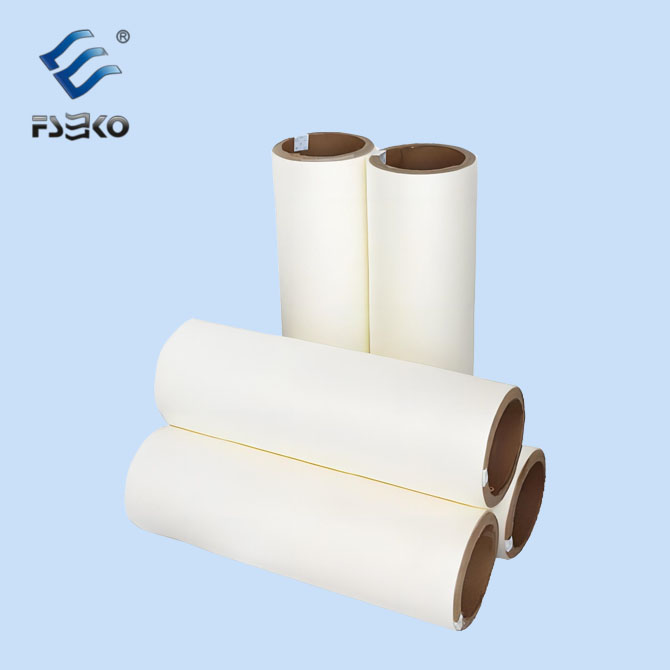
Thermal Performance: How Thermal Precoated Film Outperforms Conventional Coatings
Thermal conductivity and emissivity benchmarks (ASTM C177/ISO 8302) vs. paint, epoxy, and anodized layers
Thermal precoated film delivers exceptional heat management—its thermal conductivity ranges from 20 to 400 W/mK, far exceeding epoxy (0.2–0.5 W/mK) and anodized aluminum (15–30 W/mK). Per ASTM C177/ISO 8302 testing, its emissivity exceeds 0.85, enabling 40% more efficient radiative heat dissipation than solvent-based paints. This performance stems from engineered ceramic matrices that eliminate thermal bottlenecks common in multilayer coatings.
Sub-1 mm thickness advantage: minimizing interfacial thermal resistance without compromising durability
At just 0.2–0.8 mm thick, thermal precoated film achieves interfacial thermal resistance below 0.01 cm²·K/W—a 90% reduction versus conventional alternatives. Despite its ultra-thin profile, it maintains structural integrity through 1,000+ hours of ASTM D4060 abrasion testing. Its monolithic application eliminates delamination risks inherent in sprayed or layered coatings, while graphene-enhanced formulations ensure crack resistance up to 300°C.
Energy Efficiency: Dramatic Reduction in Process Energy with Thermal Precoated Film
Deposition Energy Comparison: Slot-Die Thermal Precoated Film (3.2–5.8 kWh/m²) vs. Thermal Spray (25–40 kWh/m²) and Solvent-Based Curing
Thermal precoated film slashes energy use during application: slot-die deposition consumes only 3.2–5.8 kWh/m²—verified in controlled lab testing. That’s 75–90% less than thermal spray (25–40 kWh/m²) and significantly lower than solvent-based systems requiring extended curing. The result is lower operational costs, reduced carbon intensity, and uncompromised coating quality.
Elimination of Thermal Drying: >60% Time Savings and Near-Zero VOC Emissions vs. Air-Cured Epoxies
Unlike air-cured epoxies, thermal precoated film activates instantly under heat—eliminating multi-hour drying stages. This cuts production cycle times by over 60%, boosting throughput in continuous operations. Crucially, the process emits near-zero volatile organic compounds (VOCs), removing hazardous emissions and associated environmental compliance burdens while improving workplace safety.
Manufacturing Scalability: Integrating Thermal Precoated Film into High-Speed Roll-to-Roll Production
Thermal precoated film enables step-change scalability through seamless integration with roll-to-roll (R2R) production. Unlike batch-dependent methods such as thermal spraying or solvent curing, R2R slot-die coating operates continuously at speeds exceeding 10 m/min—removing substrate handling delays and curing bottlenecks. Modular systems allow rapid capacity expansion by adding coating stations without workflow re-engineering, all while maintaining ±0.1 μm thickness precision across widths up to 1.5 meters. Material utilization reaches 95%—versus just 40–60% for spray methods—cutting waste and cost. Compatibility with flexible substrates like polyimide and metal foils supports direct integration into electronics and energy storage manufacturing, achieving throughputs of 5,000 m²/hour at just 3.2–5.8 kWh/m².
Regulatory & Functional Advantages: Thermal Precoated Film as a Sustainable Alternative to Hard Chrome Plating
Corrosion resistance (ASTM B117: 1,200+ hrs) and full RoHS/REACH compliance versus hazardous hard chrome processes
Thermal precoated film delivers robust corrosion resistance—surpassing 1,200 hours in ASTM B117 salt spray testing, outperforming traditional hard chrome plating. Critically, it eliminates hexavalent chromium, a known carcinogen central to conventional plating that demands hazardous waste treatment and regulatory oversight. Fully compliant with RoHS and REACH, it contains zero restricted substances—reducing environmental liability, eliminating toxic byproducts like chromium sludge, and supporting safer workplaces. Its functional resilience in extreme environments, combined with high material efficiency and low-waste processing, aligns with circular economy principles and positions it as a high-performance, sustainable alternative for corrosion-critical applications.
FAQ
What are the main benefits of thermal precoated film compared to conventional coatings?
Thermal precoated film offers superior thermal conductivity and emissivity, significant energy savings during application, faster production times, minimal VOC emissions, and environmental compliance, all while ensuring durability and corrosion resistance.
How does thermal precoated film achieve high energy efficiency?
It uses slot-die deposition, consuming only 3.2–5.8 kWh/m², significantly lower than conventional methods. It also activates instantly under heat, reducing time and energy spent on drying.
What environmental benefits does thermal precoated film provide?
It emits near-zero VOCs, eliminates hexavalent chromium, and is compliant with RoHS and REACH standards, thus reducing environmental and workplace hazards.
How is thermal precoated film adapted for large-scale manufacturing?
The film integrates seamlessly into high-speed roll-to-roll production, enhancing throughput and allowing for rapid capacity expansion without re-engineering workflows.
Table of Contents
- Thermal Performance: How Thermal Precoated Film Outperforms Conventional Coatings
- Energy Efficiency: Dramatic Reduction in Process Energy with Thermal Precoated Film
- Manufacturing Scalability: Integrating Thermal Precoated Film into High-Speed Roll-to-Roll Production
- Regulatory & Functional Advantages: Thermal Precoated Film as a Sustainable Alternative to Hard Chrome Plating
- FAQ