 EN


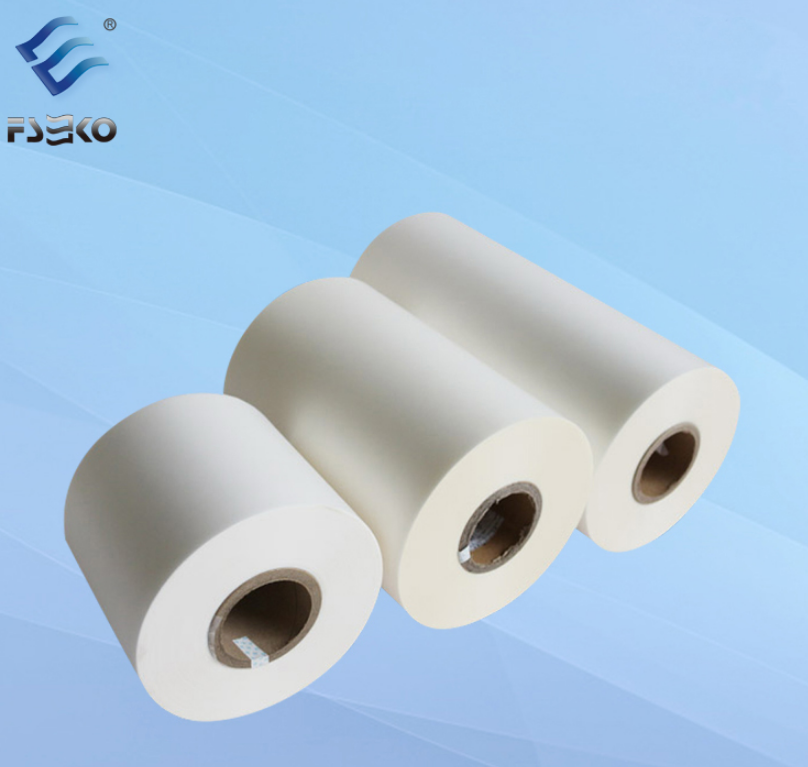
Why Standard Lamination Films Keep Letting Go
Digital print jobs have a habit of exposing weaknesses that offset work never touches. A standard thermal film that runs clean on a litho sheet can behave like a different product entirely once it meets an HP Indigo or Xerox output. The reason is rarely the film itself. It is the surface it is being asked to bond to.
HP Indigo presses use liquid electrophotographic technology, and the process leaves a trace of silicone oil on the printed sheet. That oil lowers surface energy, which is a polite way of saying the adhesive has nothing to grab onto. Xerox machines create the opposite problem: toner particles sit on top of the paper instead of absorbing into it, forming a raised, less porous layer. A general-purpose adhesive cannot wet out properly across that terrain. The result shows up as bubbling, edge lift, or partial delamination that only becomes obvious after cutting and folding. A super sticky film is formulated specifically for these surfaces, but before reaching for one, it helps to understand which adhesion failure is actually happening.
The Real Reasons Adhesion Fails on Hard-to-Bond Surfaces
Adhesion failure is not one problem. It is a cluster of problems that look similar on a reject sheet but require different fixes. A useful diagnostic framework from adhesive film manufacturer Jessup breaks hard-to-stick scenarios into five buckets: low surface energy materials, contamination, temperature and moisture, wrong adhesive type, and surface texture. Low surface energy plastics such as polypropylene and polyethylene sit below roughly 36 dynes per centimeter, a threshold where many adhesives simply cannot spread and anchor. Silicone oil on a digital print falls into the contamination bucket even though it arrived as part of the printing process. Cold storage and condensation attack tack and contact, which is why a label that holds at room temperature can lift in a walk-in cooler.
The table below gives a practical comparison of how standard thermal films and super sticky films tend to behave across the failure modes that matter most in digital finishing.
| Failure mode | Standard thermal film | Super sticky film |
|---|---|---|
| Silicone oil on HP Indigo prints | Weak bond, high bubble risk | Formulated to bond through residual oil |
| Thick toner on Xerox prints | Incomplete contact, edge lift | High-tack layer grips raised toner |
| Low surface energy plastics (PP/PE) | Poor wet-out, easy peel | Improved wet-out, but surface prep still matters |
| Post-cut edge stability | Prone to lifting on tight cuts | Stronger bond resists edge release |
| Temperature swings | Adhesive softens or embrittles | Broader operating window, though extremes still test limits |
How Super Sticky Film Technology Closes the Bond Gap
A super sticky film does not rely on a single trick. The adhesive layer is typically an EVA-based system engineered with a higher tack level and a lower activation threshold, so it flows into the microscopic valleys of a toner surface rather than sitting on top of the peaks. On a digital sheet with heavy ink coverage, that flow is the difference between a bond that holds through a guillotine cut and one that peels at the first stress point.
The base film matters too. BOPP brings dimensional stability and a clean gloss or matte finish, while the adhesive layer does the quiet work underneath. A 27-micron construction can deliver enough stiffness for posters and packaging without adding unnecessary bulk, but the number on the datasheet is less important than how the adhesive behaves after thermal activation. Testing to a recognized peel standard, such as ASTM D903, gives converters a way to compare film lots and lamination settings without relying on a fingernail peel test at the end of the line. That kind of measurement matters when a job is already running and the clock is against you.
A Shop-Floor Case: When Edge Lift Threatened a Packaging Run
A short-run packaging converter took on a cosmetics carton job printed on an HP Indigo press. The sheets looked clean coming off the printer, and the standard BOPP thermal film ran without visible issues at the laminator. The trouble appeared at the die cutter. Along the fold lines and tight corners, the film began lifting in small, consistent patches. A fingernail test confirmed what the operator already suspected: the bond was sitting on the silicone oil rather than biting into the print.
The first instinct was to slow the laminator and raise the roller temperature. That helped a little, but the edge lift came back on the next pallet. The fix was a switch to a super sticky digital laminating film with a high-tack EVA layer, run at the same line speed and a slightly adjusted nip pressure. Peel checks according to ASTM D903 showed a more consistent bond across the sheet, and the die-cut edges stayed flat through folding and carton assembly. The job did not need a new laminator or a different print method. It needed an adhesive system designed for the surface the shop was actually running.
Where Super Sticky Films Still Hit Limits
A super sticky film is not a universal pass for every difficult substrate. It raises the ceiling on what a thermal laminator can handle, but it does not erase the physics of adhesion. A surface that is heavily contaminated with dust, mold-release agent, or machining oil can still defeat a high-tack adhesive, because no film can bond through an invisible barrier. Severely low-energy substrates, especially some untreated polyolefins, may still require corona treatment or a primer before lamination. And while super sticky formulations tolerate a wider temperature range than standard films, prolonged exposure to extreme heat or repeated freeze-thaw cycles will eventually challenge any thermoplastic adhesive.
Honest job matching matters more than a marketing claim. If the print surface is reasonable and the failure is driven by toner topography or residual fuser oil, a super sticky film is often the direct answer. If the substrate is contaminated or the environment is genuinely extreme, the film is one part of a process fix, not a standalone cure. Converters who treat it as a diagnostic tool rather than a magic roll tend to get better results and fewer repeat failures.
Matching the Film to the Job, Not the Other Way Around
The practical takeaway is straightforward. Digital printing has changed the surface chemistry of the sheets coming off the press, and standard thermal films were not built around that chemistry. A super sticky film closes the gap by using an adhesive layer that can cope with silicone oil, heavy toner, and the low surface energy conditions that cause bubbling and edge lift. It will not fix a dirty substrate or a badly calibrated laminator, but when the failure is surface-driven, it removes a stubborn bottleneck.
Guangdong EKO Film Manufacture Co., Ltd. has been producing BOPP thermal laminating films since the late 1990s and supplies super sticky digital films from a production base with ISO 9001 certification and an annual capacity exceeding 6,000 tons. The company's film range covers gloss, matte, soft-touch, and anti-scratch options, which gives converters room to match the adhesive performance to the finish a job actually needs. For shops wrestling with adhesion failures on digital work, that combination of adhesive formulation experience and manufacturing scale is worth a conversation.
Table of Contents
- Why Standard Lamination Films Keep Letting Go
- The Real Reasons Adhesion Fails on Hard-to-Bond Surfaces
- How Super Sticky Film Technology Closes the Bond Gap
- A Shop-Floor Case: When Edge Lift Threatened a Packaging Run
- Where Super Sticky Films Still Hit Limits
- Matching the Film to the Job, Not the Other Way Around