 EN
EN


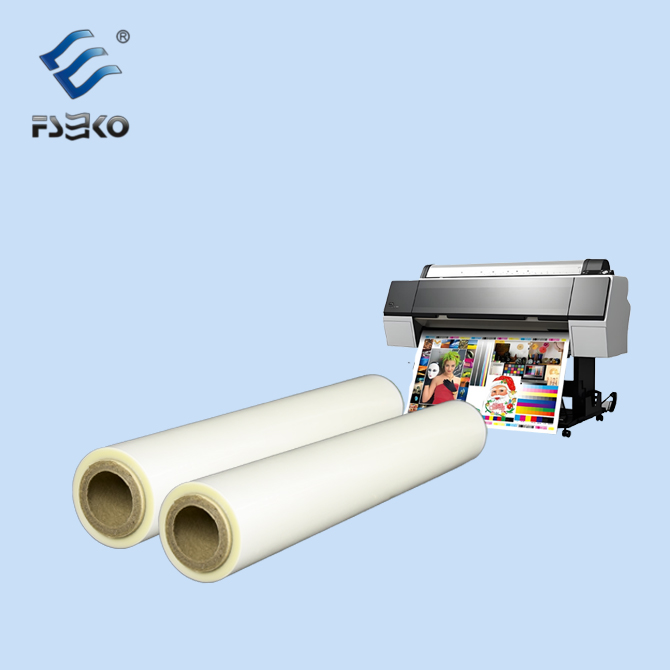
What Makes Super Sticky Thermal Lamination Film High Adhesion Critical for Extreme-Temperature Manufacturing?
Manufacturing settings where temperatures swing wildly between extremes pose real problems for regular adhesives. Think about products moving from cold storage at minus 40 degrees Celsius right into hot curing ovens hitting 250 degrees. Standard glues just can't handle these jumps, often failing completely after only half a year with failure rates going over 37 percent according to recent research published last year. The solution comes in the form of super adhesive thermal lamination films engineered with special two stage technology. These materials keep their grip strength above 15 Newtons per square centimeter even when subjected to all those temperature swings. What this means for factories is no more expensive peeling issues in critical parts where reliability simply cannot be compromised.
Thermal Stability and Bond Integrity Across -40°C to 250°C Operating Ranges
What makes this film stand out is its special copolymer mix that keeps working properly when regular glues either get too stiff or runny. At temperatures below minus 20 degrees Celsius, tiny crystal reinforcements stop those annoying micro cracks from forming. When things heat up past 150 degrees, the aromatic cross links help keep the polymer chains from getting all tangled up. Real world testing shows that bonds stay strong for over 90 percent of their life even after going through thousands of temperature changes in car manufacturing tests. This kind of reliability actually cuts down on warranty issues by around two thirds according to recent industry reports from 2024.
| Temperature Extremes | Competitive Adhesion Loss | Super Sticky Film Retention |
|---|---|---|
| -40°C (24h exposure) | 42% peel strength reduction | ⪸8% strength variance |
| 250°C (1h dwell) | Complete adhesive flow | 94% original bond strength |
| 100 rapid cycles | Delamination onset | Zero cohesive failure |
Glass Transition Temperature (Tg), Curing Kinetics, and Long-Term Cohesion in Harsh Industrial Environments
The film has a glass transition temperature (Tg) around 280 degrees Celsius, which is about 70 degrees higher than what most systems typically experience during operation. This means it stays stable even when temperatures spike, avoiding that softening effect that happens in rubbers. When it comes to curing, the process works really well too. At 180 degrees Celsius, the material reaches complete cross linking within less than 90 seconds. What this creates are network structures resistant to breaking down from water over time, so they hold up against harsh chemicals for extended periods. Real world testing on offshore oil platforms tells us something interesting. After sitting through 18 months of constant salt fog exposure, these films retained approximately 87% of their original adhesion strength. That's actually quite impressive compared to standard epoxy options, beating them by roughly three times in those quick aging tests according to the Industrial Adhesives Journal from last year.
Sector-Specific Performance of Super Sticky Thermal Lamination Film
Aerospace: Outgassing Compliance, Shear Retention, and Vacuum-Thermal Cycling Reliability
For aerospace use, materials must stick to strict ASTM E595 outgassing standards, specifically under 1.0% Total Mass Loss (TML) and less than 0.1% Collected Volatile Condensable Materials (CVCM). This particular film passes NASA's rigorous low-outgassing tests and still holds over 90% of its original shear strength even after going through more than 500 thermal cycles from as cold as -40 degrees Celsius all the way up to 250 degrees. What makes it stand out is how the material's crosslinking has been fine-tuned to stop those tiny cracks from forming when exposed to extreme conditions. We're talking about situations where vacuum pressures fall below 10^-6 Torr while temperatures swing by more than 15 degrees per minute. This kind of durability matters a lot for parts used in satellites and rocket engines where failure isn't an option.
Automotive Electronics: CTE Matching, Power Module Bonding, and Thermal Shock Resilience
In automotive power electronics, getting the right match between the Coefficient of Thermal Expansion (CTE) of lamination films and silicon carbide substrates is absolutely essential. We need to stay within about ±1 ppm/K to avoid those nasty interfacial stress fractures that show up after thousands of thermal shock cycles, typically ranging from -40°C all the way up to 200°C. The really good stuff? Those super adhesive formulations that let us bond IGBT modules directly, with thermal conductivity ratings over 3.5 W/mK. This helps move heat away effectively even when dealing with loads exceeding 200 amps. And here's something important for electric vehicle manufacturers: peel strength stays above 85% after being exposed to harsh conditions like 85°C temperature and 85% humidity for 168 straight hours. This matters a lot for EV battery packs and motor controllers because nobody wants thermal runaway issues causing problems down the road.
Balancing Ultra-High Adhesion with Functional Debondability for Sustainability
The new generation of super sticky thermal lamination films solves a real problem manufacturers face every day: how to create bonds that last through normal operations but can be safely broken when components reach their end of life. With landfills packed full of stuff last year alone (the U.S. EPA counted around 146 million tons of manufacturing waste in 2023, most containing bonded materials), companies need better solutions. That's where these advanced materials come in handy. They work thanks to clever chemical reactions that respond to triggers. For instance, thermally reversible versions hold strong at 2.1 MPa during regular use but let go cleanly once temperatures hit 180 degrees Celsius, making parts reusable. Some even react to electromagnetic signals, which is great news for aerospace applications where taking apart expensive equipment without damage saves money and resources. We're seeing material consumption drop anywhere from 30% to half across product lifecycles. What this means practically is that manufacturers no longer have to choose between strong bonds and eco-friendly practices. Both can coexist in today's production environments.
Validating Real-World Reliability: Testing Protocols for Super Sticky Thermal Lamination Film
Accelerated Aging, Low-Outgassing Certification, and Thermal Conductivity Benchmarking
When there's no room for error, thorough validation becomes absolutely critical. The accelerated aging process according to ASTM D3045 puts materials through extreme temperature shifts from minus 40 degrees Celsius all the way up to 250 degrees, checking how well bonds hold up after thousands of simulated stress cycles. For applications requiring ultra-clean environments, we also run low-outgassing tests following NASA standard 6001. These show that volatile compounds stay under 1% total mass loss, which prevents any contamination issues in vacuum systems. We measure thermal conductivity using ASTM E1461 methods to make sure heat moves efficiently at over 5 watts per meter Kelvin. This kind of performance is what makes our materials suitable for cutting edge electronic cooling solutions. All these rigorous tests give manufacturers confidence when specifying components for aircraft, cars, power plants, and other demanding industrial applications.
FAQ
What is super sticky thermal lamination film?
Super sticky thermal lamination film is an advanced material engineered to maintain strong adhesion even under extreme temperature fluctuations, from -40°C to 250°C, often used in manufacturing settings where reliability is critical.
How does it perform compared to standard adhesives?
Unlike standard adhesives that can fail under temperature swings, super sticky thermal lamination film maintains high adhesion, reducing expensive issues like peeling and delamination.
What industries benefit from this technology?
Industries such as automotive, aerospace, and offshore oil platforms benefit from this technology due to its durability, compliance with rigorous standards, and ability to withstand harsh environments.
Is this material eco-friendly?
Yes, these films are designed to be functionally de-bondable, offering sustainability by reducing material consumption and allowing for recycling and reuse of components at the end of their lifecycle.
Table of Contents
- What Makes Super Sticky Thermal Lamination Film High Adhesion Critical for Extreme-Temperature Manufacturing?
- Sector-Specific Performance of Super Sticky Thermal Lamination Film
- Balancing Ultra-High Adhesion with Functional Debondability for Sustainability
- Validating Real-World Reliability: Testing Protocols for Super Sticky Thermal Lamination Film