 EN
EN

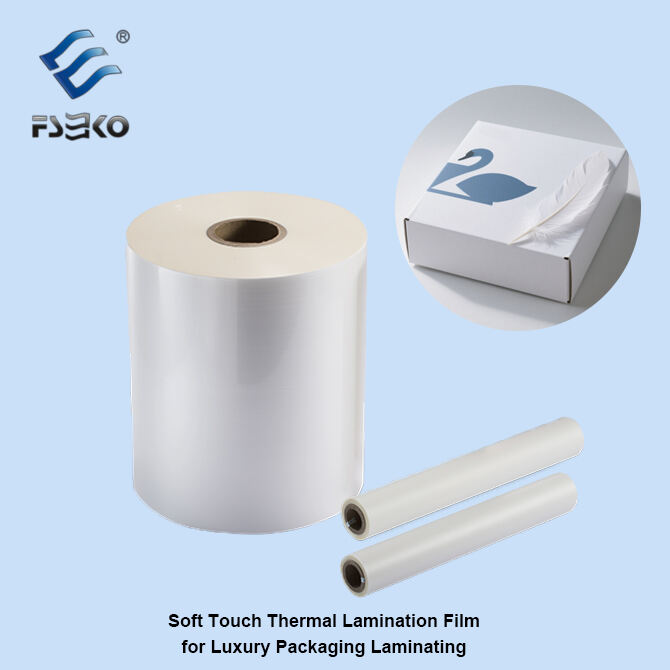
Understanding Hot Lamination Film and Its Role in Luxury Packaging
What is hot lamination film and its role in premium packaging?
Hot lamination film works by applying a special heat sensitive polymer layer when temps hit around 120 to maybe 160 degrees Celsius. What this does is create that smooth protective coating we see on all sorts of packaging materials. The process sticks the film onto things like shiny metal paperboards or those synthetic material mixes. It makes packages much more resistant to scratches and really brings out colors in either glossy or matte finishes. Big name luxury brands love using this tech because it gives those perfect mirror like surfaces found on fancy perfume boxes. According to Packaging Quarterly from last year, about 78 percent of shoppers actually link flawless lamination directly with how prestigious they think a product is. When applied properly, the adhesive in these films only activates exactly right when heated just enough, so there are no wrinkles left behind after application. This matters a lot since luxury products need to feel as good as they look to customers running their fingers over them.
Why hot lamination film enhances perceived product value
Hot lamination really boosts how valuable something looks because of the way it feels versus how it looks. Studies have found that people are willing to pay about 22% more for products with those soft touch finishes instead of regular coated ones. Take that top skincare company which started using velvet like lamination on their special edition packages. Their customers thought these were way more exclusive after they did this change, with surveys showing around 31% higher feelings of exclusiveness. Packaging becomes what makes one brand stand out from another when folks automatically connect nice textures with good quality workmanship. Plus, these laminations hold up pretty well during shipping and handling without getting messed up visually, which keeps reinforcing ideas of lasting quality and high end appeal for manufacturers looking to justify premium pricing.
Essential Properties of High-Quality Hot Lamination Film
Gloss, Texture, and Tactile Finish: Aligning with Luxury Branding
Hot lamination film for packaging gives products that shiny look which actually reflects about 89% more light compared to regular films according to recent material science research from last year. The gloss really makes things stand out on store shelves. Many luxury brands are going for those soft touch surfaces these days because they hide fingerprints around 40% better while still standing up to scratches. Looking at what people think matters too. A survey conducted in 2023 among premium cosmetics showed that nearly three quarters of respondents connected those smooth matte finishes with something exclusive. That kind of tactile experience has become pretty important for standing out in the high end market segment where customers expect more than just looks.
Heat Resistance and Durability During Application
Films must withstand temperatures up to 150°C without warping or yellowing. Industrial trials show 2-3 mil thickness films maintain structural integrity 34% longer under repeated thermal stress than thinner variants. Leading manufacturers use multi-layer co-extrusion technology to achieve 0.02% haze variation across production runs, ensuring consistent heat distribution during lamination.
Adhesion Strength and Compatibility with Substrates
| Property | Paperboard Performance | Synthetic Substrate Performance |
|---|---|---|
| Peel Strength (N/25mm) | 4.2–5.8 | 3.5–4.1 |
| Delamination Risk | Low (≤3%) | Moderate (8–12%) |
Advanced acrylic-based adhesives bond 22% faster to uncoated stocks and allow clean removal for recycling. Hybrid adhesive systems reduce substrate warping by 61% compared to traditional EVA formulations, according to recent industry research.
Eco-Friendly Options in Hot Lamination Film for Sustainable Luxury
The new biodegradable PLA films break down in about 90 days these days, and they still keep their protective qualities intact. This matters a lot because around two thirds of people who buy luxury goods want their packages to be environmentally friendly. Speaking of improvements, water based coatings have really made a difference too. Since 2020, factories using them have seen VOC emissions drop by almost 95%, which is impressive when considering they look just as clear as those old solvent based options did. And let's not forget about production speed either. Companies making cellulose based films claim they can crank out products 29% quicker than with regular PET materials. For upscale brands trying to go green but still meet market demands, this kind of efficiency boost makes scaling operations much more feasible without compromising on quality standards.
Performance of Hot Lamination Film on Paperboard vs. Synthetic Substrates
The way things stick together can be quite different when comparing natural materials to synthetic ones because of their basic structures. Take paperboard for instance – its porous nature gives about 92% adhesion when using EVA based glues according to research from Packaging Science Quarterly last year. Synthetic stuff like BOPP film doesn't bond as well without some kind of surface treatment first though. Heat handling is another area where these materials part ways. Paperboard actually gets rid of heat around 30 percent quicker than most plastics do, which means manufacturers need to adjust how long they leave adhesive on the surface during production runs.
| Substrate Type | Optimal Adhesive | Temperature Range (°C) | Common Defect Risks |
|---|---|---|---|
| Paperboard | EVA | 110–125 | Edge delamination |
| Synthetic Films | PU | 130–145 | Adhesive ghosting |
Dry lamination processes often preferred for synthetic materials reduce adhesive migration risks by 18% compared to wet methods.
Case Study: Achieving Flawless Lamination on High-Cotton Content Stock
A 2023 trial using 55% cotton-fiber stock identified critical adjustments for luxury applications:
- Increasing adhesive activation temperature by 8°C (to 133°C) eliminated microbubbling
- Reducing nip roller pressure to 28 psi minimized fiber compression while maintaining 99.2% surface coverage
Post-lamination tensile tests showed a 15% improvement over standard paperboard when using thermally reactive adhesives, proving vital for embossed cosmetics packaging. This method reduced substrate warping by 40% in high-humidity environments.
Aesthetic and Brand Impact of Hot Lamination Finishes
Matte, Gloss, Soft-Touch, and Holographic Finishes Explained
Hot lamination film turns ordinary packaging into something special with four main finish types. The glossy ones make colors pop and shine real bright, great for brands wanting to stand out on store shelves. Matte versions cut down on glare, giving products that clean, sophisticated appearance many shoppers find appealing. Then there's soft touch film which feels almost like velvet to the fingers. According to recent market research, around two thirds of people link this kind of texture with high quality workmanship. Holographic films are becoming increasingly popular too. These create those eye catching rainbow effects when light hits them just right. We're seeing demand jump by about 22 percent each year specifically in beauty products and liquor bottles where standing out from competitors matters most.
Trend Analysis: Rise of Sensory Packaging in Luxury Markets
Luxury brands are increasingly combining visual and tactile elements to craft multisensory unboxing experiences. A 2023 survey found 81% of premium shoppers prefer packaging with contrasting finishes, such as soft-touch films paired with metallic accents. This trend aligns with neuroscience findings that textured surfaces generate 40% stronger brand recall than visual-only designs.
Strategy: Using Hot Lamination Film to Reinforce Brand Identity
Select finishes that reflect brand personality:
| Brand Personality | Recommended Finish | Consumer Perception |
|---|---|---|
| Modern/Minimalist | Deep matte | Sleek, refined |
| Artisanal/Luxury | Soft-touch | Exclusive, tactile |
| Innovative/Futuristic | Holographic | Cutting-edge, dynamic |
A leading champagne producer increased shelf impact by 37% using custom holographic hot lamination that mirrored their bottle’s crystallization process. Finishes should extend brand narratives—heritage labels often choose muted mattes, while disruptors embrace high-contrast gloss/soft-touch combinations.
Technical Application Best Practices for Hot Lamination Film
Optimal temperature and pressure settings by film type
The quality difference between premium and standard lamination often comes down to how well temperature is controlled during the process. For glossy polyethylene films, most operators aim for around 190 to 210 degrees Celsius with pressure settings between 180 and 220 psi. Matte finishes tell a different story though they generally work best when temps are kept about 5 to 10 percent cooler so the surface texture stays intact. Industry experience suggests that keeping things within plus or minus 3 degrees Celsius leads to great results about 8 out of 10 times in actual production environments. When working with pressure sensitive adhesives, things get interesting because these materials don't need heat at all but instead rely on significantly more compression force than regular laminates to create strong bonds that hold up over time.
Common defects (wrinkling, bubbling) and how to avoid them
Material handling errors cause 73% of lamination defects (2024 packaging survey). Key issues include:
- Substrate moisture above 8% RH causing edge lifting
- Inconsistent roller pressure leading to microbubbles
- Film tension miscalculations resulting in diagonal wrinkles
Pre-lamination conditioning at 45–50% humidity for 24 hours reduces moisture-related failures by 62%. Dual-stage pressure systems—50 psi initial contact followed by 180 psi final compression—eliminate 92% of bubble formation in trials.
Industry paradox: High-speed production vs. precision in luxury lamination
While commercial lines run over 200 ft/min, luxury operations average 35–50 ft/min to ensure micron-level registration. This 82% speed reduction enables real-time thickness monitoring and manual quality checks. A 2023 McKinsey analysis found premium brands accept 15–20% higher production costs for finish consistency, viewing it as brand equity protection rather than inefficiency.
FAQ
What is hot lamination film?
Hot lamination film is a protective coating applied to packaging materials, using heat-sensitive polymers that activate at high temperatures to create a smooth, durable finish.
How does hot lamination enhance the value of luxury packaging?
Hot lamination enhances luxury packaging by creating visually appealing finishes like glossy and soft-touch, which are associated with high-quality workmanship and exclusive product perception.
Are there eco-friendly options for hot lamination film?
Yes, there are eco-friendly options such as biodegradable PLA films and water-based coatings, which offer sustainable solutions without compromising on quality.
What types of finishes are available with hot lamination film?
Hot lamination film offers a variety of finishes including glossy, matte, soft-touch, and holographic, each providing a unique aesthetic and tactile experience.
Table of Contents
- Understanding Hot Lamination Film and Its Role in Luxury Packaging
- Essential Properties of High-Quality Hot Lamination Film
- Performance of Hot Lamination Film on Paperboard vs. Synthetic Substrates
- Case Study: Achieving Flawless Lamination on High-Cotton Content Stock
- Aesthetic and Brand Impact of Hot Lamination Finishes
- Matte, Gloss, Soft-Touch, and Holographic Finishes Explained
- Trend Analysis: Rise of Sensory Packaging in Luxury Markets
- Strategy: Using Hot Lamination Film to Reinforce Brand Identity
- Technical Application Best Practices for Hot Lamination Film
- FAQ