 EN


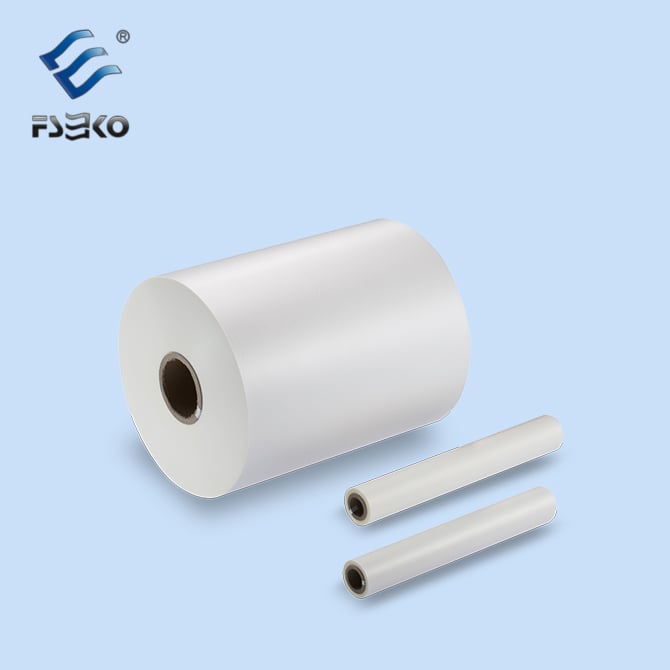
Why Standard Thermal Film Struggles With Toner Prints
Walk into any shop running a production digital press and the same complaint comes up sooner or later: the laminating line is the bottleneck nobody planned for. Toner-based prints behave differently from offset ink on paper. The toner sits on top of the sheet rather than soaking in, and it fuses into a slightly uneven, semi-glossy layer. Standard thermal film designed for offset work often meets that surface and decides not to cooperate. The adhesive flows, but it flows around toner particles instead of anchoring into them, and the result is a bond that looks fine on day one and starts whispering about failure a week later.
High-quality digital thermal films are formulated for exactly this surface. The adhesive chemistry is tuned to wet out on fused toner, and the film base is selected to handle the slightly different thermal expansion of a digital sheet. That sounds like a small adjustment. On the shop floor, it is the difference between a job that ships and a job that comes back.
The Curl Problem Nobody Warns You About
Paper has a memory. Run a sheet through a digital press, where it sees heat and pressure, and then through a thermal laminator, where it sees heat and pressure again, and the fiber network starts to remember every insult. Standard thermal film can amplify curl because the film and the paper expand at different rates during the hot nip and then contract at different rates during cooling. On thin coated stocks, the sheet can cup enough to jam a folder or refuse to stack flat.
Digital thermal films address curl through a combination of film base thickness and adhesive flow characteristics. A slightly more compliant film base absorbs some of the differential movement instead of transferring it all to the paper. The adhesive layer, meanwhile, is designed to reach its bonding state at a temperature that keeps the sheet below the range where fiber stress becomes permanent. A converter running short-run book covers on a digital press once described the change this way: the same job that used to come off the line with a visible bow now stacks flat enough that the folding team stopped asking questions. That is not a dramatic speed gain. It is a reliability gain, and those tend to matter more over a month of production.
Adhesion That Holds on Coated and Synthetic Stocks
Coated papers and synthetic substrates are where generic thermal film shows its limits most clearly. The coating on a gloss or silk sheet is a barrier. It resists penetration, which is good for print gloss and bad for adhesive anchorage. Synthetic stocks like PP or PET are worse: low surface energy means the adhesive has very little to grab onto unless the chemistry is matched to the substrate.
Digital thermal films typically use a modified adhesive system that includes a lower-molecular-weight component to improve wet-out on difficult surfaces. The tradeoff is that the adhesive must still resist blocking on the roll and maintain enough cohesion to survive die-cutting. Getting all three properties into one coating is the formulator's real challenge. A comparison table helps show where the differences show up in practice.
| Performance Area | Generic Thermal Film | Digital Thermal Film |
|---|---|---|
| Toner adhesion | Partial, prone to flaking at edges | Designed for fused toner wet-out |
| Curl on thin coated stock | Noticeable bow after cooling | Reduced through compliant base |
| Synthetic substrate grip | Weak without primer | Formulated for low-energy surfaces |
| Blocking resistance on roll | Adequate | Balanced against adhesion needs |
| Die-cutting behavior | Can chip at tight radii | Cohesive enough to cut clean |
The die-cutting line is worth pausing on. An adhesive that grabs too aggressively on a synthetic stock can actually make die-cutting harder because the film resists the blade. A well-designed digital thermal film balances adhesion against machinability, which is why the table shows the two properties moving together rather than one dominating.
Temperature Windows and the Margin for Error
Every thermal film has a activation window, and every laminator has a temperature profile that drifts. The question is how much drift the film can absorb before the bond quality drops. Generic thermal films often have a narrow window, which means an operator who is running a little hot or a little cold produces work that passes visual inspection but fails a peel test later.
Digital thermal films tend to be formulated with a broader activation window, partly because digital shops often run mixed jobs on the same line and cannot afford to retune the laminator for every stock. A wider window does not mean the film is foolproof. It means the operator has room to work without chasing a perfect setpoint. The tradeoff is that a broader window usually comes with a slightly higher minimum activation temperature, which matters on heat-sensitive stocks. That is the kind of detail a good supplier will flag before the order ships, not after.
Industry guidance from organizations like Fogra and the digital printing consortiums consistently points to the same principle: the laminating step should be specified as part of the digital workflow, not bolted on afterward. A film that is designed for the workflow behaves predictably. A film that is designed for offset and sold into a digital shop behaves like a guest who did not get the memo.
What High-Quality Actually Means on the Roll
The word quality gets used loosely in film sales. On the production floor, quality shows up in three measurable places: coating weight consistency across the web, slit edge cleanliness, and batch-to-batch repeatability. A roll with uneven coating will laminate beautifully in the center and fail at the edges. A roll with a rough slit will leave adhesive crumbs on the roller and cause picks in the finished sheet. A roll that varies from batch to batch forces the operator to retune the line every time a new carton is opened.
High-quality digital thermal films are manufactured with tight tolerances on all three. That is not glamorous work. It is the kind of manufacturing discipline that determines whether a print shop can run the same job spec on Monday and Friday and get the same result. In one packaging project involving digitally printed cosmetic cartons, the finishing team tracked edge lift over several production runs and found that switching to a film with tighter coating tolerance cut the reject rate at the slitter by a noticeable margin. The film cost slightly more per roll. The waste reduction more than covered the difference.
Where Thermal Film Still Needs a Different Approach
Thermal film is not the right answer for every digital job. Very heavy toner coverage on uncoated stock can create a surface that no thermal adhesive wets out perfectly, and in those cases a pressure-sensitive film or a primer may be the better route. Extremely heat-sensitive substrates, such as some thin synthetic labels, may also need a cold process to avoid dimensional distortion. Knowing when to specify thermal film and when to step back is part of getting consistent results.
Shops that run a mix of offset and digital work often keep both film types on the shelf and match the film to the job rather than forcing one chemistry across the board. That approach costs a little more in inventory and a lot less in rework.
Guangdong EKO Film manufactures digital thermal films with a focus on the variables that matter at the laminator: consistent adhesive coating, clean slitting, and batch repeatability that holds up across production runs. The company's supply chain and quality control processes are built around the reality that a film is only as good as its worst roll.