 EN
EN


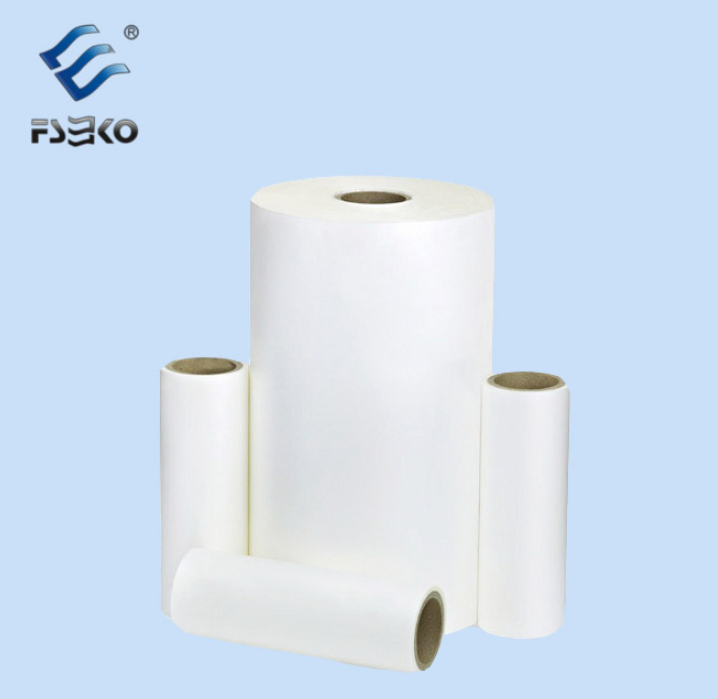
The Critical Vulnerability of Digital Prints Without Digital Thermal Lamination Film
Toner adhesion failure under heat, humidity, and handling — why digital output is uniquely at risk
Digital prints rely on toner particles fused to the substrate by heat and pressure. Unlike offset inks that soak into paper fibers, toner sits on the surface as a thermoplastic resin—creating inherent fragility. When exposed to high humidity (above 60% RH), toner absorbs moisture and swells, leading to micro-cracking and flaking. Heat cycles—common in shipping, vehicle interiors, or outdoor signage—soften and reflow the toner, distorting fine details. Even routine handling transfers skin oils that weaken the toner–substrate bond. These vulnerabilities manifest within weeks: color accuracy fades, edges curl, and surface integrity erodes. Digital thermal lamination film solves this by encapsulating the toner in a stable polymer matrix—blocking moisture ingress, preventing thermal deformation, and preserving optical clarity.
Real-world evidence: 68% of unlaminated digital posters show visible degradation within 90 days (SGIA 2023)
A 2023 Specialty Graphic Imaging Association (SGIA) study found that 68% of unlaminated digital posters displayed visible degradation—including color fading, edge curling, and surface scratches—within just 90 days of indoor display. Outdoor applications saw an 89% failure rate over the same period, driven primarily by UV exposure, humidity fluctuations, and physical abrasion during mounting and handling. In contrast, posters protected with digital thermal lamination film showed no measurable degradation. This confirms a fundamental truth: unprotected digital prints are temporary by design. Any application requiring longevity beyond a few months demands lamination—the cost of reprinting, reinstallation, and brand erosion far exceeds the modest investment in protection.
How Digital Thermal Lamination Film Solves the Problem: Chemistry, Compatibility, and Clarity
Polyester vs. polypropylene: optical clarity, thermal shrink control, and toner-safe adhesion
The base film material critically influences performance. Polyester delivers superior optical clarity—its refractive index preserves color fidelity and text legibility even under direct lighting—and maintains dimensional stability during lamination, shrinking less than 0.5% at typical processing temperatures. Polypropylene, by comparison, exhibits higher thermal shrinkage and can introduce haze on high-gloss prints. For digital output, polyester is strongly preferred: its surface energy aligns reliably with toner layers, eliminating risks of lifting, bubbling, or poor wet-out.
Hot-melt adhesive science: reactive formulations that bond without melting or distorting toner layers
Effective lamination requires adhesion without damage. Digital thermal lamination films use low-activation hot-melt adhesives—typically activated between 180–210°F—well below the softening point of most toners (≈250°F). This prevents reflow, smearing, or detail loss during application. The adhesive chemistry leverages reactive polymers that form molecular-level bonds with toner particles, anchoring them securely while maintaining gradient integrity and fine-line sharpness.
Durability Metrics That Matter: UV, Moisture, and Mechanical Resistance
≥99% UVA/UVB Blocking — Preserving Color Fidelity and Preventing Yellowing in Signage & Retail Displays
High-performance digital thermal lamination film blocks ≥99% of UVA and UVB radiation—halting the photochemical degradation that causes dye fading and substrate yellowing. Unprotected prints in retail environments or window displays often show noticeable color shift and embrittlement within three months. With full-spectrum UV blocking, color fidelity remains consistent, and print flexibility is preserved—directly supporting brand consistency and reducing lifecycle replacement costs.
Tear Strength ≥120 N/cm and Pencil Hardness ≥3H — Defending Against Abrasion, Cleaning, and Installation Stress
Durability isn’t just about longevity—it’s about resilience under real-world conditions. A tear strength of ≥120 N/cm ensures the laminate resists cuts, edge lifting, and tension during installation and handling. A pencil hardness rating of ≥3H confirms resistance to everyday abrasion—from cleaning cloths and fingernails to carton stacking and transit friction. Together, these metrics prevent delamination, scuffing, and surface wear—extending functional life across demanding commercial, retail, and outdoor applications.
Optimizing the Digital Thermal Lamination Process for Flawless Results
Temperature calibration, dwell time, and acclimatization protocols to prevent silvering and delamination
Flawless lamination hinges on precise control of three interdependent variables. First, temperature must be calibrated to match the film’s adhesive activation range—typically 90°C to 130°C—avoiding both under-bonding and toner distortion (which manifests as silvering: trapped air pockets). Second, dwell time must balance full adhesive wet-out against heat accumulation; too short yields weak adhesion, too long risks toner reflow. Third, acclimatization is non-negotiable: printed sheets should rest in the laminator’s environment for at least 24 hours to equalize moisture content—preventing delamination triggered by rapid humidity shifts. When all three parameters are aligned, the result is a wrinkle-free, optically clear, mechanically robust finish built to withstand installation stress and long-term display demands.
Table of Contents
- The Critical Vulnerability of Digital Prints Without Digital Thermal Lamination Film
- How Digital Thermal Lamination Film Solves the Problem: Chemistry, Compatibility, and Clarity
- Durability Metrics That Matter: UV, Moisture, and Mechanical Resistance
- Optimizing the Digital Thermal Lamination Process for Flawless Results