EN
EN



A Must-Read for Digital Printing Users: 4 Key Indicators for Choosing the Right Thermal Lamination Film
Digital printing offers unparalleled flexibility—small-batch printing, variable data, personalization, and rapid delivery. However, post-printing processing in digital printing also presents unique challenges. Not all thermal lamination films are perfectly compatible with toner printing. The following four key indicators will guide your selection.
1. Toner Adhesion Compatibility
This is the most important factor. Ordinary thermal lamination film is often fail on digital prints because the toner remains on the paper surface instead of being absorbed. The result is: bubbles, edge lifting, and delamination.
Look for pre-coated film specifically formulated for digital applications. High-quality digital thermal lamination film utilize advanced adhesive chemistry to firmly bond with toner particles from printing presses such as HP Indigo, Xeikon, Canon, Ricoh, and Heidelberg. Even with large-area coverage, they achieve bubble-free adhesion and maintain their bonding strength over a long period.
2. Finished Product Quality and Optical Sharpness
Digital printing is typically used for high-end applications such as photo albums, marketing materials, and small-batch packaging. Your chosen thermal lamination film should enhance, not degrade, print quality.
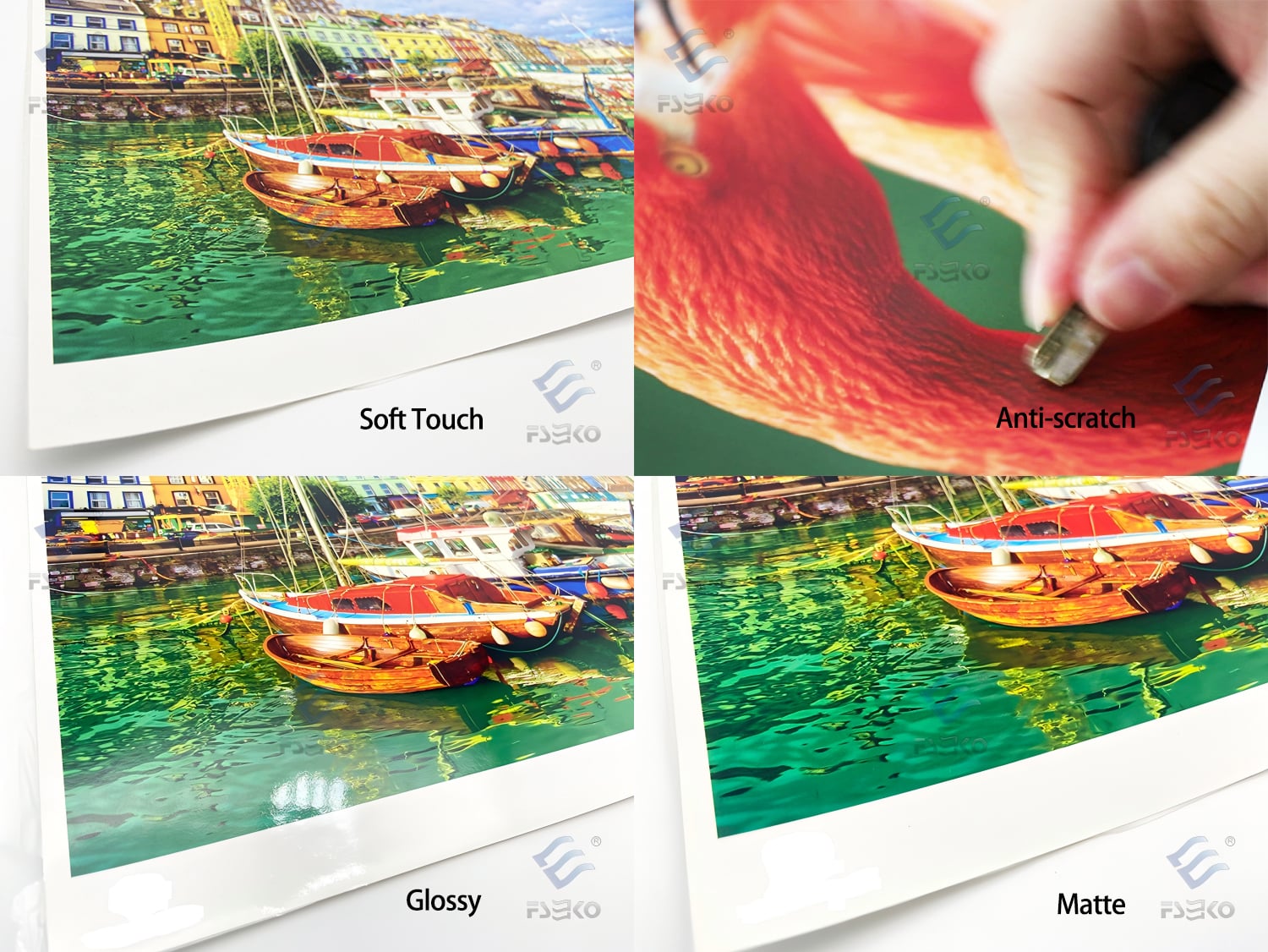
Consider both glossy and matte options. High-gloss surface should significantly improve color vibrancy and contrast. Matte surface should provide a smooth and glare-free surface. Regardless of the choice, the thermal lamination film must be optically clear, free from haze or distortion.
3. Production Efficiency
The digital printing environment demands extremely high speeds. Short lead times mean any pre-coated film that causes production delays is unacceptable.
When choosing a thermal lamination film, consider the following:
•Smooth operation with no adhesive residue on the rollers
•Immediate post-processing (cutting, folding, binding)
•Roll-to-roll consistency
Precise slitting and even winding are also crucial—they ensure smooth unfolding on high-speed laminators.
4. Post-Processing Compatibility
Many digitally printed products require additional post-processing, such as folding, die-cutting, spot UV coating, and hot stamping. Your thermal lamination film should support these processes.
Check that the lamination is flexible enough to withstand creases and folds without cracking. For products requiring hot stamping on the laminated surface, confirm its compatibility. Some digital laminations are specifically designed for secondary decoration.
Make the Right Choice
A suitable digital lamination should balance four aspects: strong toner adhesion, excellent optical quality, high production efficiency, and good post-processing compatibility.
EKO Film's digital thermal lamination film (20mic gloss, 23mic matte, 28mic anti-scratch & soft touch) is designed specifically for dry toner digital printing. They offer reliable adhesion, a glossy surface finish, and consistent performance.
Choose wisely—the right lamination not only protects your printings but also safeguards your reputation.