 EN
EN


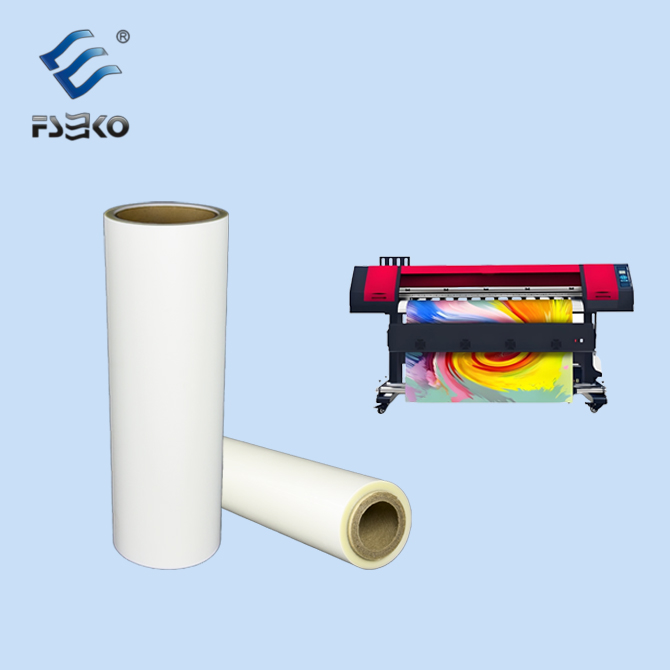
The Hidden Bottleneck in Digital Print Finishing
Digital inkjet presses have transformed the short-run and on-demand printing landscape. Faster setup, variable data capability, and near-offset quality have made them indispensable in commercial print shops. Yet one bottleneck consistently undermines the final output quality: lamination. Standard thermal films, designed for conventional offset or toner-based digital presses, often fail when applied to inkjet-printed substrates. The result—delamination, bubbling, or adhesive failure—can turn a premium print job into scrap.
A 2024 market analysis placed the global thermal lamination films market at roughly USD 3.04 billion, with digital thermal lamination films emerging as the fastest-growing segment. This growth reflects a fundamental shift: print providers are moving away from one-size-fits-all lamination solutions and toward films engineered specifically for the unique chemistry of inkjet inks. The question is not whether to adopt inkjet-compatible films, but how to implement them without disrupting existing workflows.
What Makes Inkjet Inks Different Under the Laminate
Understanding the technical challenge starts with the ink itself. Aqueous inkjet inks are water-based, containing pigments suspended in a fluid carrier that must evaporate or be absorbed into the substrate. Unlike toner, which sits on the surface and fuses with heat, aqueous inks penetrate into the coating layer of the paper. This porous ink-receiving layer creates a weak boundary between the print and any subsequent adhesive.
When a standard thermal film—typically using a generic hot-melt adhesive—is applied at temperatures above 100°C, residual moisture in the ink layer can flash into steam. The expanding vapor disrupts the adhesive bond, causing what press operators call “silvering” or full delamination. The problem intensifies with heavy ink coverage or secondary colors, where the ink film thickness is greatest.
The solution lies in adhesive chemistry. Inkjet-compatible films employ modified EVA or specialized acrylic formulations that remain active at lower activation temperatures—typically 85°C to 105°C rather than the standard 110°C to 130°C range. This lower thermal budget reduces moisture-related failure while still achieving bond strengths that meet or exceed conventional films.
A Real-World Conversion at a Midwest Commercial Printer
Consider the experience of a commercial printer in the Chicago area that runs two HP PageWide presses alongside a fleet of offset equipment. The shop had been using the same thermal lamination film across all output—offset, toner-based digital, and inkjet. Rejection rates on inkjet jobs consistently ran between 8% and 12%, primarily due to edge delamination and bubbling on heavy-coverage areas.
The production manager ran a side-by-side trial comparing their standard film against an inkjet-specific film with a lower activation temperature and modified adhesive. Over a three-week period covering approximately 15,000 sheets of various substrates—coated cover stocks, uncoated text papers, and synthetic media—the inkjet-compatible film delivered a rejection rate of just 1.2%. The shop calculated an annualized savings of over USD 18,000 in material waste and rework labor, not counting the intangible cost of client dissatisfaction.
The key takeaway: the conversion didn’t require new equipment or retraining. It simply required matching the film specification to the print technology.
Key Performance Indicators for Inkjet Lamination Films
Not every film labeled “inkjet compatible” performs equally. Print buyers and production managers should evaluate candidates against a consistent set of metrics. The table below summarizes the critical performance parameters observed across multiple shop-floor evaluations.
| Parameter | Standard Thermal Film | Inkjet-Compatible Film | Why It Matters |
|---|---|---|---|
| Activation Temperature | 110–130°C | 85–105°C | Lower heat reduces moisture flash-off in aqueous inks |
| Peel Strength (g/2.54cm) | 1,800–2,200 | 2,000–2,400 | Higher bond strength resists delamination under stress |
| Adhesive Chemistry | Generic EVA | Modified EVA or acrylic | Better wet-out on porous ink-receiving layers |
| Corona Treatment Level | Standard | Enhanced | Improved surface energy for adhesive anchoring |
| Dimensional Stability | ±5% | ±2% | Tighter tolerance prevents wrinkling on thin stocks |
These figures are drawn from internal testing protocols used by several ISO 9001-certified film manufacturers. The takeaway is straightforward: generic films may pass a visual inspection on the first sheet but fail the consistency test across a full production run.
Implementation Without Disrupting Workflow
Switching to inkjet-compatible lamination films does not require a complete production overhaul. The implementation path typically follows three stages.
-
Substrate and ink profiling. Document the specific paper stocks and ink sets used in the digital pressroom. Different substrates—glossy coated vs. uncoated vs. synthetic—respond differently to adhesive chemistry. A film that performs well on a matte coated stock may underperform on a felt-textured uncoated sheet.
-
Temperature calibration. Run a temperature ramp test on the laminator with the new film. Start at the lower end of the recommended range and increase in 2°C increments until optimal adhesion is achieved. Too low a temperature leaves the adhesive incompletely activated; too high reintroduces the moisture-related failure modes the new film was designed to avoid.
-
Ink drying verification. Perhaps the most overlooked variable. Aqueous inks must be thoroughly dried before lamination—not just touch-dry, but fully cured through the ink film thickness. Some shops have found that adding a 24-hour holding period between printing and laminating reduces delamination rates by over 60%.
When Inkjet-Compatible Film Is the Right Call—and When It Isn’t
Inkjet-compatible films are not a universal solution. For UV-cured inkjet output, where the ink is polymerized rather than absorbed, standard thermal films often perform adequately because there is no residual moisture to contend with. Similarly, for toner-based digital presses—which use dry toner fused onto the surface—the adhesive challenges are fundamentally different.
Where inkjet-compatible films shine is in production environments running significant volumes of aqueous inkjet work, particularly on coated papers with heavy ink coverage. The value proposition is strongest for shops that have experienced recurring lamination failures on inkjet jobs and have ruled out operator error or equipment calibration issues.
One limitation worth noting: lower activation temperature films sometimes sacrifice ultimate heat resistance. A film that laminates beautifully at 90°C may soften or creep at temperatures above 60°C in finished goods. For applications subject to elevated temperatures—such as automotive or outdoor signage—this trade-off requires careful evaluation.
Building Consistency Through Supplier Partnership
The film itself is only half the equation. Consistency from roll to roll, batch to batch, matters as much as the initial specification. Print shops that treat lamination film as a commodity often find themselves chasing quality issues that trace back to supplier variability rather than the film chemistry itself.
A reliable manufacturing partner provides documented quality control protocols—real-time thickness monitoring, corona value detection, and bond strength testing across every production run. These measures ensure that the film that performed well in the trial is the same film that arrives on the next pallet. ISO 9001 certification serves as a useful baseline, but the real differentiator is the manufacturer’s commitment to process control and continuous improvement.
For print providers making the transition to inkjet-compatible lamination, the companies that stand out are those with deep R&D capabilities and a track record of solving real production challenges. Guangdong EKO Film Manufacture Co., Ltd., with over 19 years of experience and a portfolio of more than 20 patents, has built its reputation on precisely this kind of application-specific engineering—developing films that address the actual pain points of digital print production rather than offering generic solutions. Their focus on quality systems and manufacturing consistency gives production managers the confidence to specify inkjet-compatible films across their entire digital workflow.
Table of Contents
- The Hidden Bottleneck in Digital Print Finishing
- What Makes Inkjet Inks Different Under the Laminate
- A Real-World Conversion at a Midwest Commercial Printer
- Key Performance Indicators for Inkjet Lamination Films
- Implementation Without Disrupting Workflow
- When Inkjet-Compatible Film Is the Right Call—and When It Isn’t
- Building Consistency Through Supplier Partnership